
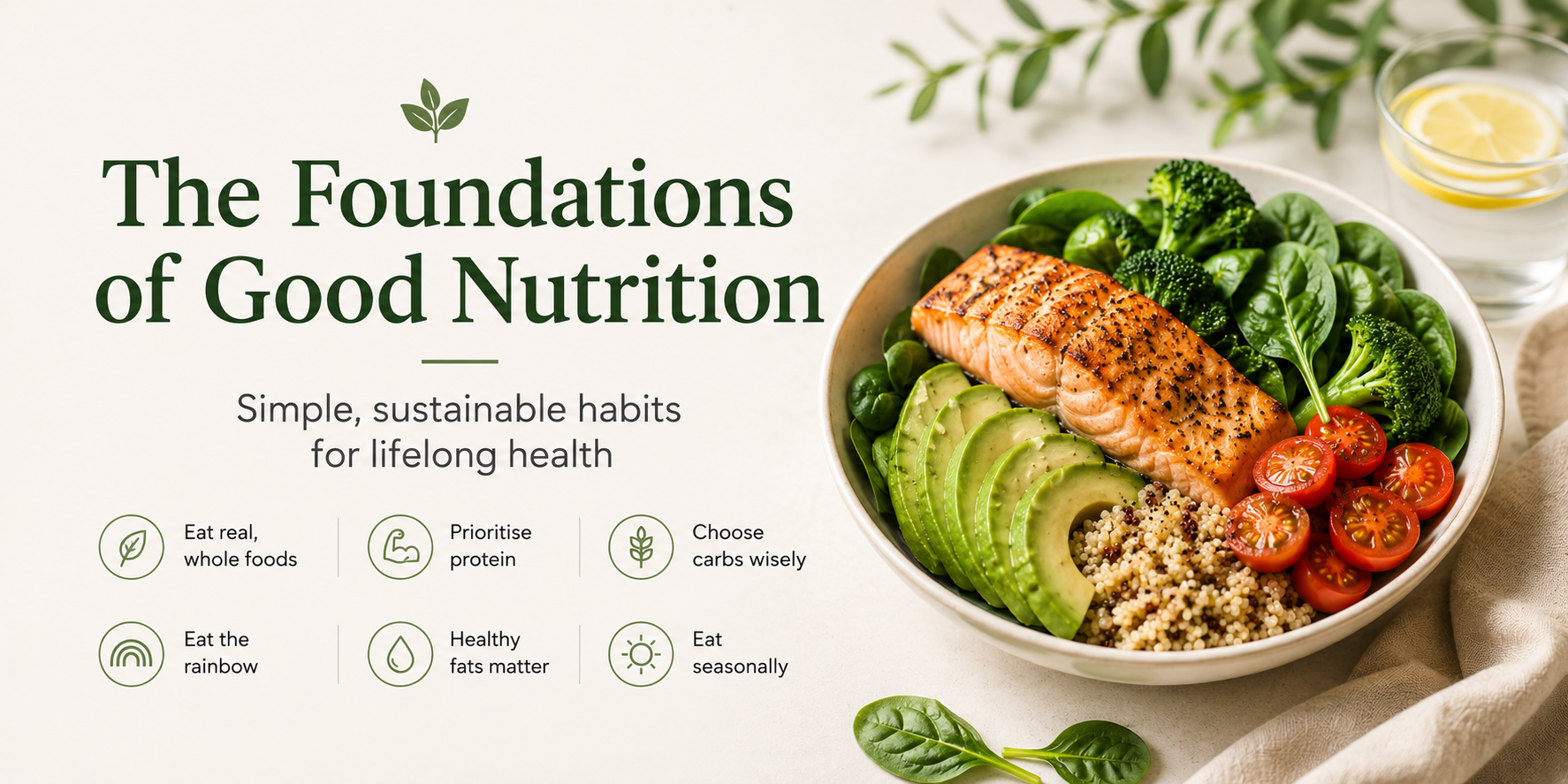
The Essential Guide to Good Nutrition
If you've ever felt confused about nutrition, you're certainly not alone.
One day we're told to avoid fat. The next it's carbohydrates. Every week there's a new superfood, a new diet or a new headline telling us we've been eating the wrong thing all along.
It's no wonder so many people give up trying.
At Health Mastery, we believe good nutrition should feel simple, enjoyable and sustainable. It's not about following restrictive diets or chasing the latest trend. It's about giving your body the nutrients it needs to function at its best, today and for many years to come.
Every meal is an opportunity to nourish your body, support your energy, protect your long-term health and reduce your risk of many preventable diseases.
You don't have to be perfect. You just need to be consistent.
Let's start with the foundations.
1. Start with real food
If there was one piece of nutritional advice we could give everyone, it would be this:
Eat more real food.
Whole foods are foods that are as close to their natural state as possible. They haven't been heavily processed or stripped of their nutrients, and your body generally knows exactly what to do with them.
Think about foods such as:
Fresh vegetables
Fruit
Eggs
Fish
Meat
Natural yoghurt
Nuts and seeds
Beans and lentils
Herbs and spices
These foods provide far more than just calories. They're packed with vitamins, minerals, fibre, healthy fats and thousands of naturally occurring plant compounds that work together to support your health.
By contrast, many ultra-processed foods are high in refined sugars, unhealthy fats, salt and additives while being relatively low in the nutrients your body actually needs.
That doesn't mean you can never enjoy a slice of cake or a takeaway. Life is for living, and food should be enjoyed. The goal isn't perfection. It's making real food the foundation of your everyday diet.

2. Prioritise protein
Protein is one of the most important nutrients in your diet, yet many people don't eat enough of it, especially at breakfast.
Protein helps your body to:
Build and repair muscles
Support your immune system
Produce hormones and enzymes
Maintain healthy bones
Keep you feeling fuller for longer
It's also particularly important as we get older. From around the age of 30, we naturally begin to lose muscle mass unless we actively work to maintain it through good nutrition and regular movement.
One of the easiest ways to improve your diet is simply to include a good source of protein with every meal. And there are plenty of plant-based sources of protein too.
Excellent sources include:
Fish
Eggs
Chicken and turkey
Lean meat
Greek yoghurt
Cottage cheese
Tofu and tempeh
Lentils and beans
Starting the day with a protein-rich breakfast can help keep your energy more stable, reduce cravings later in the day and leave you feeling satisfied for longer.
Rather than constantly reaching for snacks, you'll often find your appetite naturally becomes easier to manage.
3. Choose Carbohydrates wisely
Carbohydrates have had a bad reputation in recent years, but the truth is a little more balanced.
Your body can use carbohydrates as a source of energy. The difference is choosing carbohydrates that nourish your body rather than simply providing a quick sugar hit.
Highly refined carbohydrates such as sugary cereals, white bread, pastries, sweets and sugary drinks are digested quickly. This can lead to rapid rises in blood sugar followed by crashes that leave you feeling hungry, tired and looking for your next snack.
Instead, try building your meals around carbohydrates that come naturally packaged with fibre and nutrients, including:
Vegetables
Beans and lentils
Oats
Sweet potatoes
Whole grains
Berries
Many people also find they feel better by reducing refined carbohydrates and replacing them with extra vegetables and quality sources of protein.
Rather than thinking about eating less food, think about eating better food.
4. Eat the rainbow
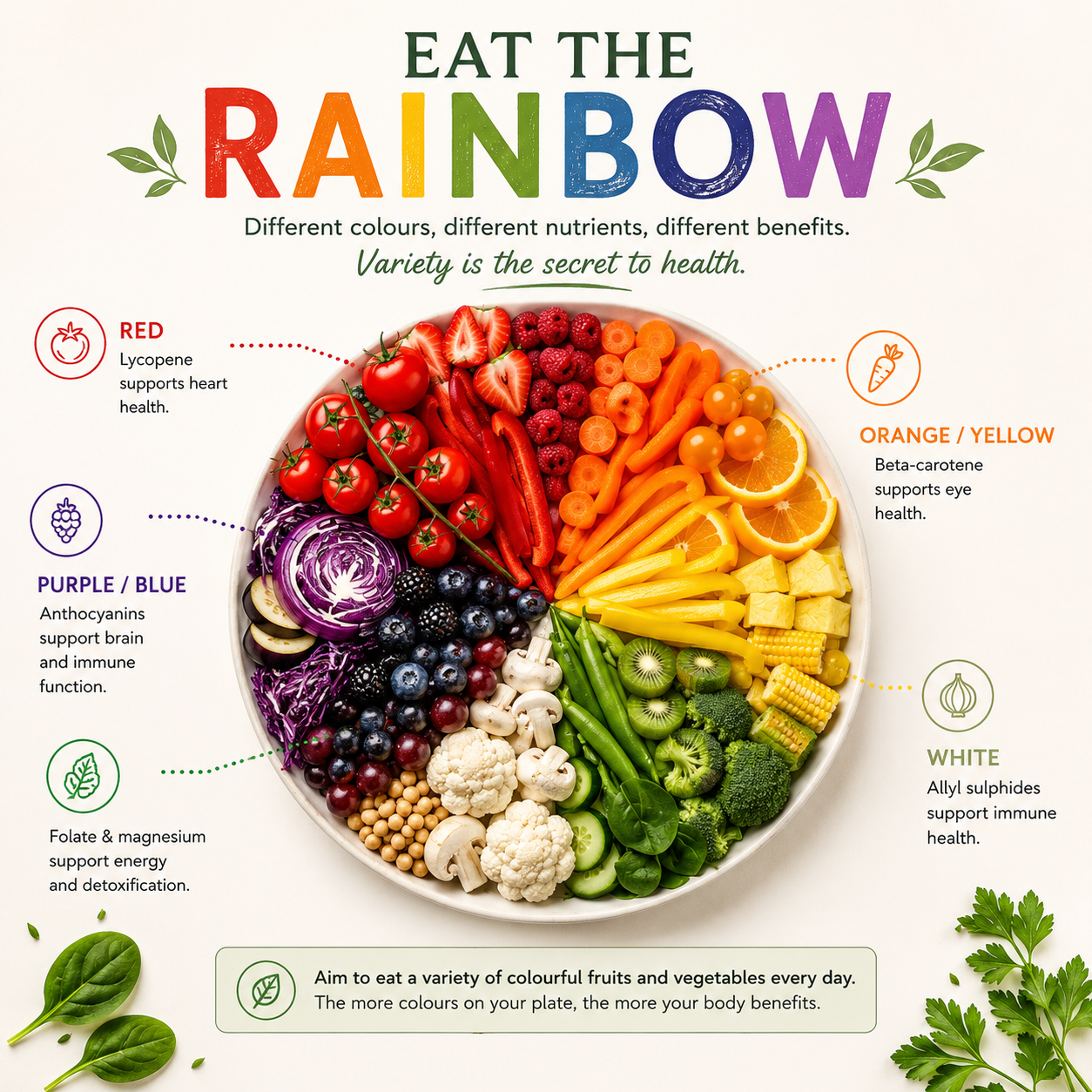
One of the simplest and most effective habits you can build is to eat a wide variety of colourful fruit and vegetables.
Each colour contains different vitamins, minerals and naturally occurring plant compounds that support different aspects of your health.
For example:
Red foods like tomatoes contain lycopene.
Orange vegetables such as carrots provide beta-carotene.
Green leafy vegetables are rich in folate, magnesium and vitamin K.
Blueberries and purple fruits contain anthocyanins.
Garlic and onions provide beneficial sulphur compounds.
The more colours on your plate, the greater the variety of nutrients you're feeding your body.
Aim to "eat the rainbow" over the course of each week rather than worrying about getting everything into one meal.
Your body thrives on variety.
5. Healthy fats are your friend
For many years, fat was unfairly blamed for almost every health problem.
Today we know that healthy fats are an essential part of a balanced diet.
Healthy fats help support:
Brain function
Heart health
Hormone production
Healthy skin
The absorption of vitamins A, D, E and K
Some of the best sources include:
Extra virgin olive oil
Oily fish such as salmon, sardines and mackerel
Avocados
Nuts
Seeds
Omega-3 fats deserve a special mention because many people simply don't eat enough of them.
If you rarely eat oily fish, it may be worth considering an omega-3 supplement to help support your nutritional intake alongside a healthy diet.
6. Eat with the Seasons
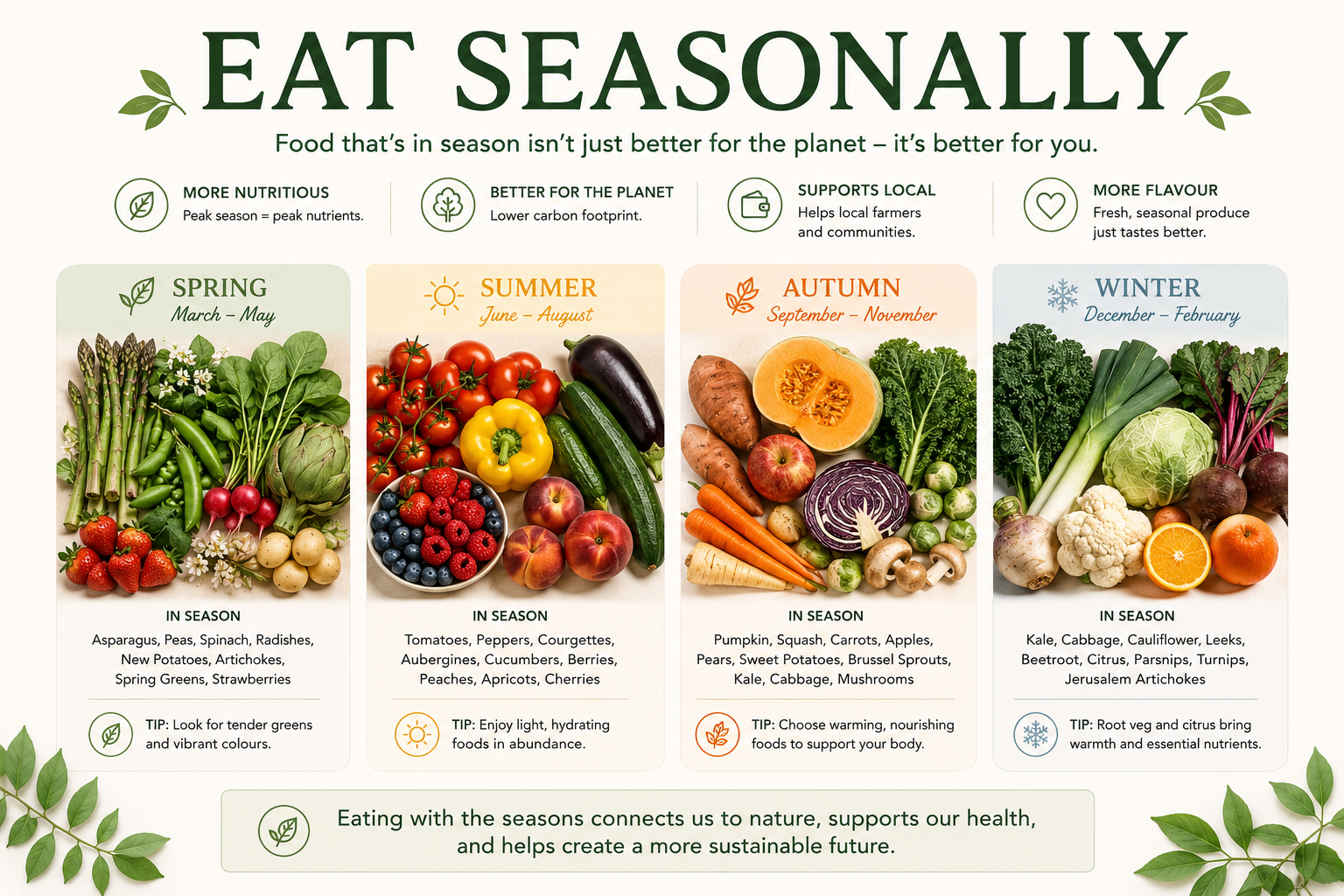
Nature has an incredible way of providing exactly what we need throughout the year.
Seasonal fruit and vegetables are often fresher, tastier and may retain more nutrients because they've spent less time travelling and in storage.
Eating seasonally also encourages greater variety in your diet.
In spring you might enjoy asparagus and leafy greens.
Summer brings berries, tomatoes and courgettes.
Autumn offers squash, apples and mushrooms.
Winter provides root vegetables, cabbage and hearty greens.
Shopping seasonally can also be kinder to your budget and supports local growers where possible.
7. Keep it simple
Perhaps the biggest secret to good nutrition is that it doesn't need to be complicated.
You don't need expensive powders, complicated recipes or the latest fashionable diet.
A healthy meal can be incredibly simple.
Try building most meals around this formula:
✔ A good source of protein.
✔ Plenty of colourful vegetables.
✔ Healthy fats.
✔ Smart carbohydrate choices where appropriate.
That's it.
Simple habits repeated day after day will always outperform short bursts of perfection.
At Health Mastery, we believe nutrition should fit around your life, not take it over. Because the healthiest way of eating is the one you can enjoy and maintain for years to come.
9. Vitamins and minerals: filling the nutritional gaps
A healthy, balanced diet should always be your main source of vitamins and minerals. Eating a wide variety of whole foods, colourful fruit and vegetables, quality protein and healthy fats is the best way to nourish your body.
That said, many of us don't eat perfectly every day. Busy lives, dietary preferences, limited food choices and different stages of life can sometimes make it difficult to get all the nutrients we need from food alone.
In these situations, carefully chosen supplements can help support your nutrition alongside a healthy diet. They aren't a replacement for real food, but they can be a practical way to top up your intake of key nutrients such as vitamin D, magnesium, omega-3 or protein, depending on your individual needs.
If you'd like to explore our range of high-quality vitamins, minerals, protein powders and nutritional supplements, visit our Nutrition Shop. Every product has been carefully selected to support a healthy diet and lifestyle.
Further Reading:
Discover the Power of Plant-Based Protein: A Guide to Delicious and Nutritious Vegan Options