We've all heard the phrase, "You are what you eat."
But what if it's not just about the food we eat?
Every day we're exposed to hundreds of different chemicals from the products we use, the air we breathe, the water we drink and the food we eat. Most of these exposures are very small, and many are considered safe within current regulations.
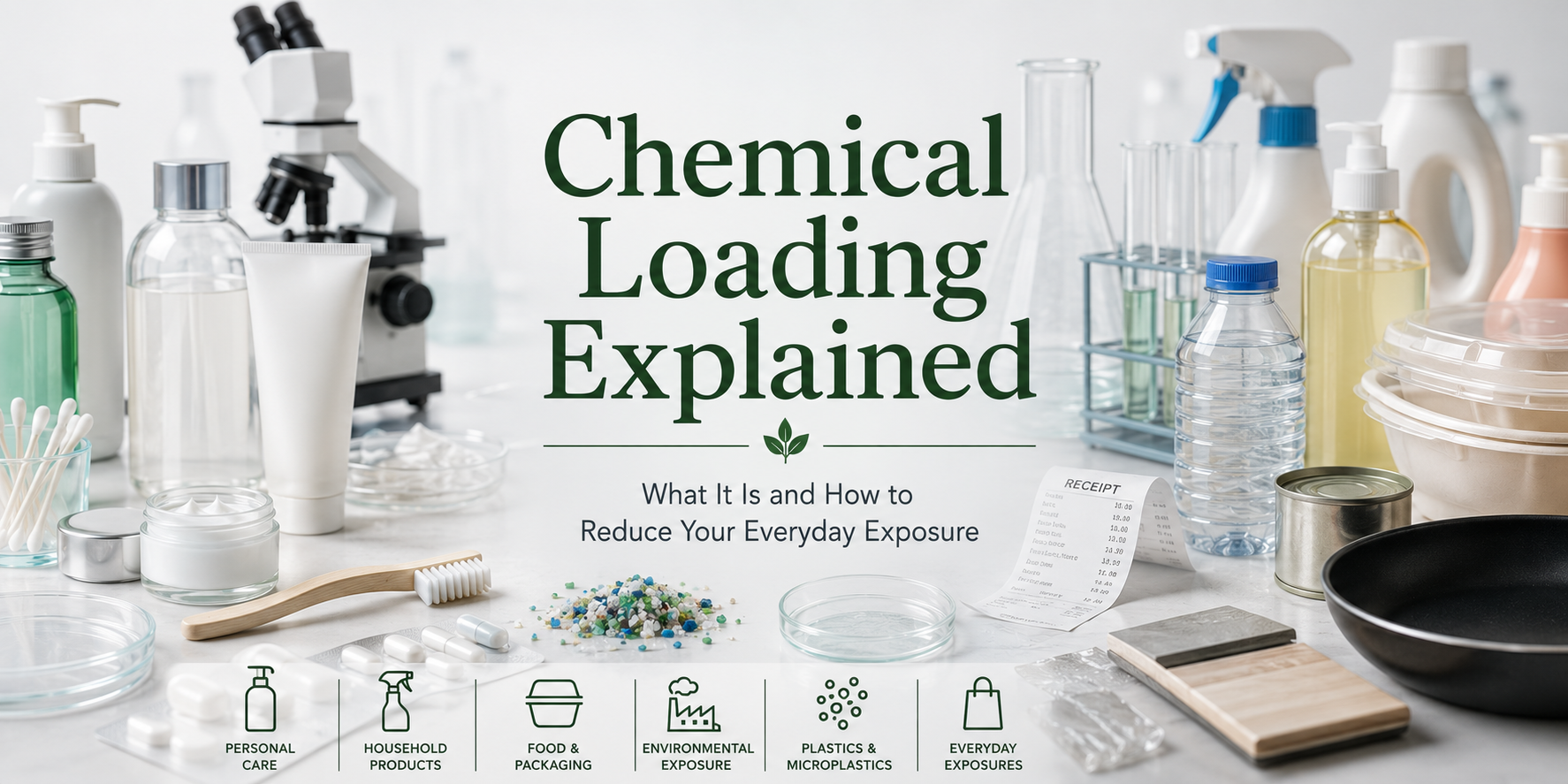
However, scientists are increasingly interested in what happens when those small exposures are added together over many years. This is known as chemical loading.
At Health Mastery, we believe knowledge is empowering. Understanding chemical loading isn't about fear or trying to avoid every chemical. It's about making informed choices and reducing unnecessary exposure where it's practical to do so.
Small changes, made consistently, can make a real difference over time.
What is chemical loading?
Chemical loading is the idea that our bodies are exposed to many different chemicals every day, from many different sources.
Rather than looking at a single product in isolation, it considers the combined effect of all our everyday exposures.
For example, before you've even left the house in the morning, you may have already used:
- Shampoo
- Conditioner
- Toothpaste
- Moisturiser
- Deodorant
- Sunscreen
- Makeup or aftershave
Later in the day you might also come into contact with:
- Food packaging
- Plastic bottles
- Cleaning products
- Air pollution
- Non-stick cookware
- Household dust
- Pesticide residues on food
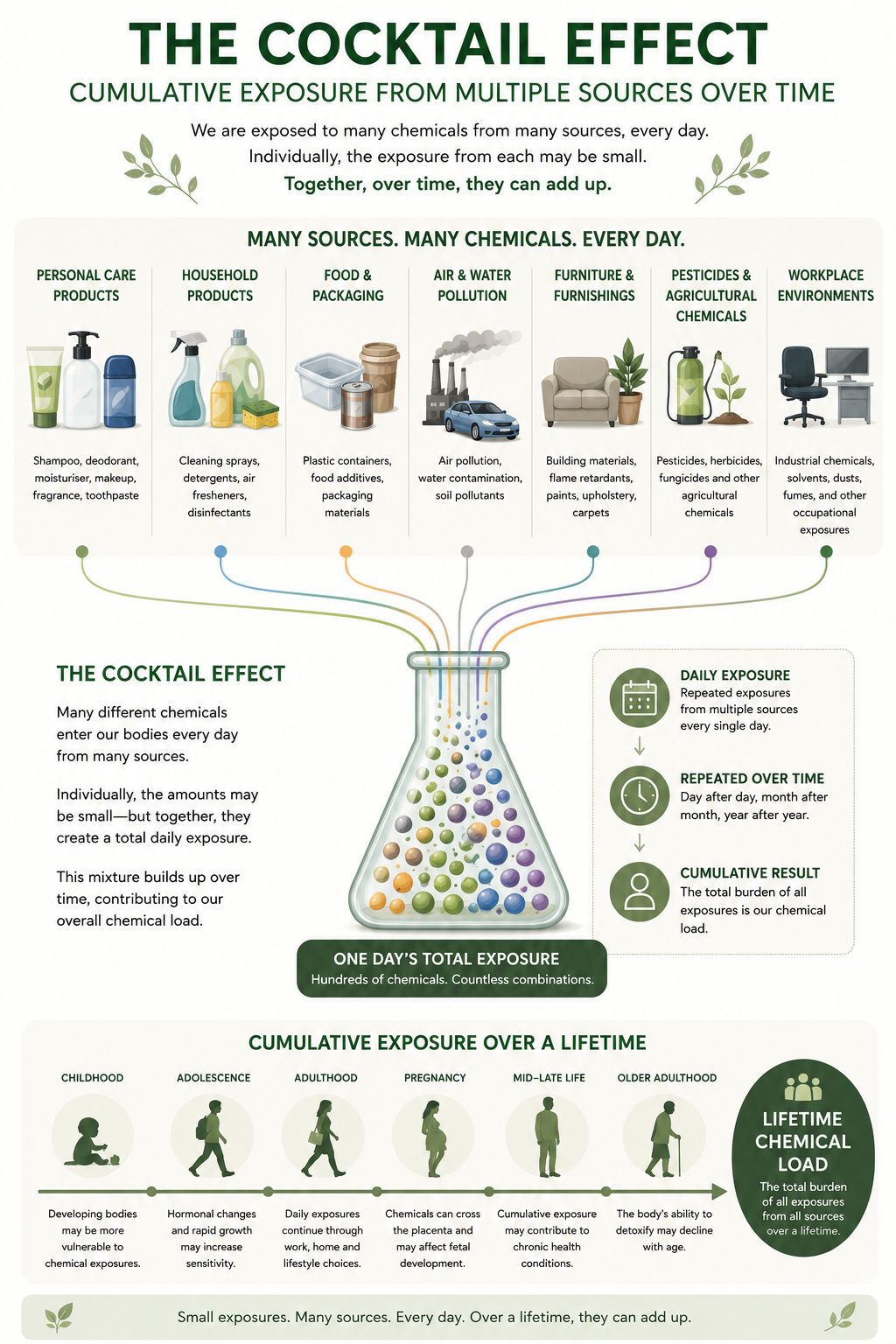
Each individual exposure may be very small, but together they form your overall chemical load.
Why does it matter?
For many years, scientists assessed the safety of chemicals one at a time. Today, research is increasingly looking at the bigger picture.
Studies have shown that many synthetic chemicals can now be detected in human blood, urine and even breast milk. Researchers have also identified substances such as microplastics in human tissues, highlighting just how widespread modern chemical exposure has become.
Some groups of chemicals have attracted particular attention. For example, endocrine disruptors are chemicals that may interfere with the body's hormone system. Hormones help regulate many important processes, including growth, development, metabolism and reproduction, so scientists are continuing to investigate how long-term exposure to certain endocrine-disrupting chemicals may affect human health.
Researchers are also exploring what's known as the cocktail effect. Rather than looking at one chemical in isolation, this considers whether repeated exposure to many different chemicals at low levels could have combined effects over a lifetime.
The science is still evolving, and there's much we don't yet know. However, many health professionals and researchers believe that taking a sensible, precautionary approach makes good sense. You don't need to eliminate every chemical from your life, but reducing unnecessary exposure where it's practical to do so is a positive step for your long-term health.
Did you know?Scientists can now detect a wide range of synthetic chemicals in the human body, including PFAS ("forever chemicals"), microplastics and certain endocrine-disrupting chemicals. Research is ongoing to better understand what these findings mean for long-term human health, but they reinforce the importance of reducing unnecessary exposure wherever practical. |
Where do these chemicals come from?
Chemical exposure doesn't come from one place.
It comes from lots of small everyday sources.
Some common examples include:
Personal care products
Shampoo, deodorant, perfume, moisturiser, toothpaste and cosmetics may all contain synthetic ingredients that come into contact with your skin every day.
Food packaging
Plastic containers, non-stick coatings and some food packaging materials can contribute to everyday exposure to certain chemicals.
Household cleaning products
Many conventional cleaning products contain fragrances, solvents and other synthetic ingredients that become part of our indoor environment.
Food
Modern agriculture has helped produce more food than ever before, but pesticide residues and food additives also contribute to our overall exposure.
Our environment
Air pollution, microplastics and industrial chemicals are now found throughout the environment, making it impossible to avoid every exposure completely.
What does the science say?
Chemical loading is an active area of scientific research.
While individual chemicals are usually assessed for safety before they can be used, researchers are increasingly studying what is sometimes called the "cocktail effect" or combined exposure.
This looks at whether multiple low-level exposures from different sources could interact in ways that aren't always captured when chemicals are assessed individually.
Some groups of chemicals, such as certain PFAS ("forever chemicals") and some endocrine-disrupting chemicals, have attracted growing scientific interest because of their persistence in the environment or their potential to interfere with normal hormone function.
There is still much to learn, and the science continues to evolve. Rather than jumping to conclusions, we believe it's sensible to stay informed and make practical choices that reduce unnecessary exposure where possible.
Six simple ways to reduce your chemical load
The good news is that you don't need to change everything overnight.
Small changes soon add up.
Here are six easy places to start:
Choose more whole foods
Fresh, minimally processed foods generally contain fewer additives than ultra-processed alternatives and often provide better overall nutrition too.
Eat a varied diet
A colourful, balanced diet helps provide the nutrients your body needs to support normal health and wellbeing.
Reduce unnecessary plastics
Where practical, choose glass or stainless steel for storing food and drinks, particularly when heating food.
Ventilate your home
Opening windows regularly can help improve indoor air quality and reduce the build-up of airborne pollutants.
Review your everyday products
Simple swaps in your skincare, toiletries and household cleaning products can help reduce unnecessary exposure to some synthetic ingredients.
Don't aim for perfection
The goal isn't to eliminate every chemical from your life.
That's impossible.
The goal is simply to make better choices where you can.
Supporting your body through good nutrition
While reducing unnecessary exposures is one part of the picture, it's equally important to give your body the nutrients it needs to function normally.
A balanced diet rich in vegetables, fruit, quality protein, healthy fats and fibre provides the vitamins and minerals your body relies on every day.
For some people, carefully chosen supplements may also help support good nutrition alongside a healthy lifestyle, particularly where there are known nutritional gaps or increased requirements.
Nutrition and lifestyle work hand in hand. Supporting one without considering the other means only seeing part of the picture.
Learn more with The Green Woman Research Centre
Health Mastery focuses on helping you support your health through nutrition, lifestyle and evidence-informed education.
If you'd like to explore chemical loading in greater depth, along with topics such as endocrine disruptors, PFAS, microplastics and natural alternatives to everyday products, visit our sister company, The Green Woman.
Their free Research Centre is dedicated to helping people understand what's in everyday products and how simple changes can help reduce unnecessary chemical exposure.
→ Explore The Green Woman Research Centre
Frequently Asked Questions
Is every chemical harmful?
No. Everything around us, including water, oxygen and the food we eat, is made of chemicals. The concern isn't "chemicals" in general, but understanding which synthetic chemicals may be unnecessary or of greater concern and making informed choices where appropriate.
Should I throw away all my household products?
Definitely not. Making gradual changes as products run out is usually more practical, affordable and sustainable.
Is organic food better?
Organic farming standards generally restrict the use of many synthetic pesticides and herbicides. While everyone's budget is different, choosing organic where it's practical can be one way to reduce certain pesticide exposures.
Is it possible to avoid chemical loading completely?
No. Modern life makes some exposure unavoidable. The aim isn't perfection but reducing unnecessary exposures while supporting your overall health through good nutrition and healthy lifestyle habits.