
Discover how one of your body's most important hormones helps regulate hunger, blood sugar and digestion, and why it's become one of the biggest breakthroughs in modern medicine.
Introduction
GLP-1 has become one of the most talked-about hormones in health, thanks to the rise of medications such as Ozempic®, Wegovy® and Mounjaro®. But long before these medicines existed, your body was already producing its own GLP-1 every time you ate.
GLP-1, short for Glucagon-Like Peptide-1, is a naturally occurring hormone that plays a vital role in regulating appetite, digestion and blood sugar levels. It acts as a messenger between your digestive system, pancreas and brain, helping your body decide when you've eaten enough, how quickly food should be digested and how much insulin should be released.
Understanding how GLP-1 works helps us appreciate just how sophisticated our bodies really are. It also explains why healthy eating patterns, regular exercise and good sleep can have such a powerful effect on appetite and long-term health.
In this article, we'll explore what GLP-1 is, how it works, why it's important, and how you can naturally support your body's own appetite regulation system.
What You'll Learn
By the end of this article you'll understand:
- What GLP-1 is and where it's produced
- How GLP-1 helps regulate hunger and fullness
- The role GLP-1 plays in blood sugar control
- Why GLP-1 slows digestion
- Why GLP-1 medications have become so popular
- How healthy lifestyle habits support your body's natural GLP-1 response
What Is GLP-1?
GLP-1 stands for Glucagon-Like Peptide-1, a hormone produced naturally by your digestive system after eating.
Rather than thinking of it as a "weight-loss hormone", it's more helpful to think of GLP-1 as part of your body's appetite regulation and energy management system.
Every time you eat, your digestive tract begins communicating with the rest of your body. GLP-1 is one of the chemical messengers responsible for sending those signals.
Its main roles include:
- Helping you feel full after eating
- Slowing the speed food leaves your stomach
- Supporting healthy blood sugar levels
- Stimulating insulin release when needed
- Reducing the release of glucagon, a hormone that raises blood sugar
Together, these actions help your body manage energy efficiently while preventing excessive spikes in blood glucose.
Where Is GLP-1 Produced?
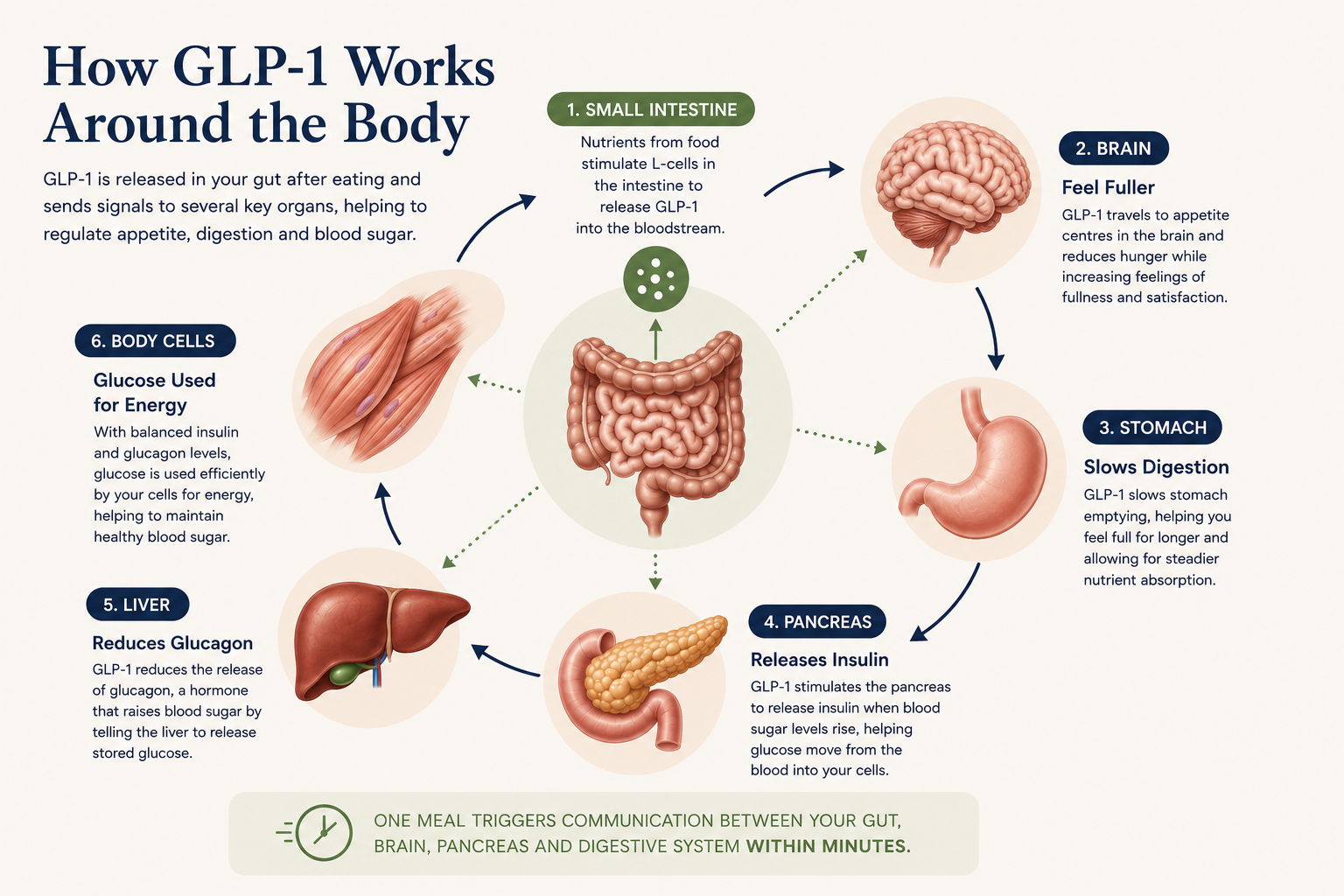
GLP-1 is produced by specialised cells called L-cells, found mainly in the lower part of the small intestine and the large intestine.
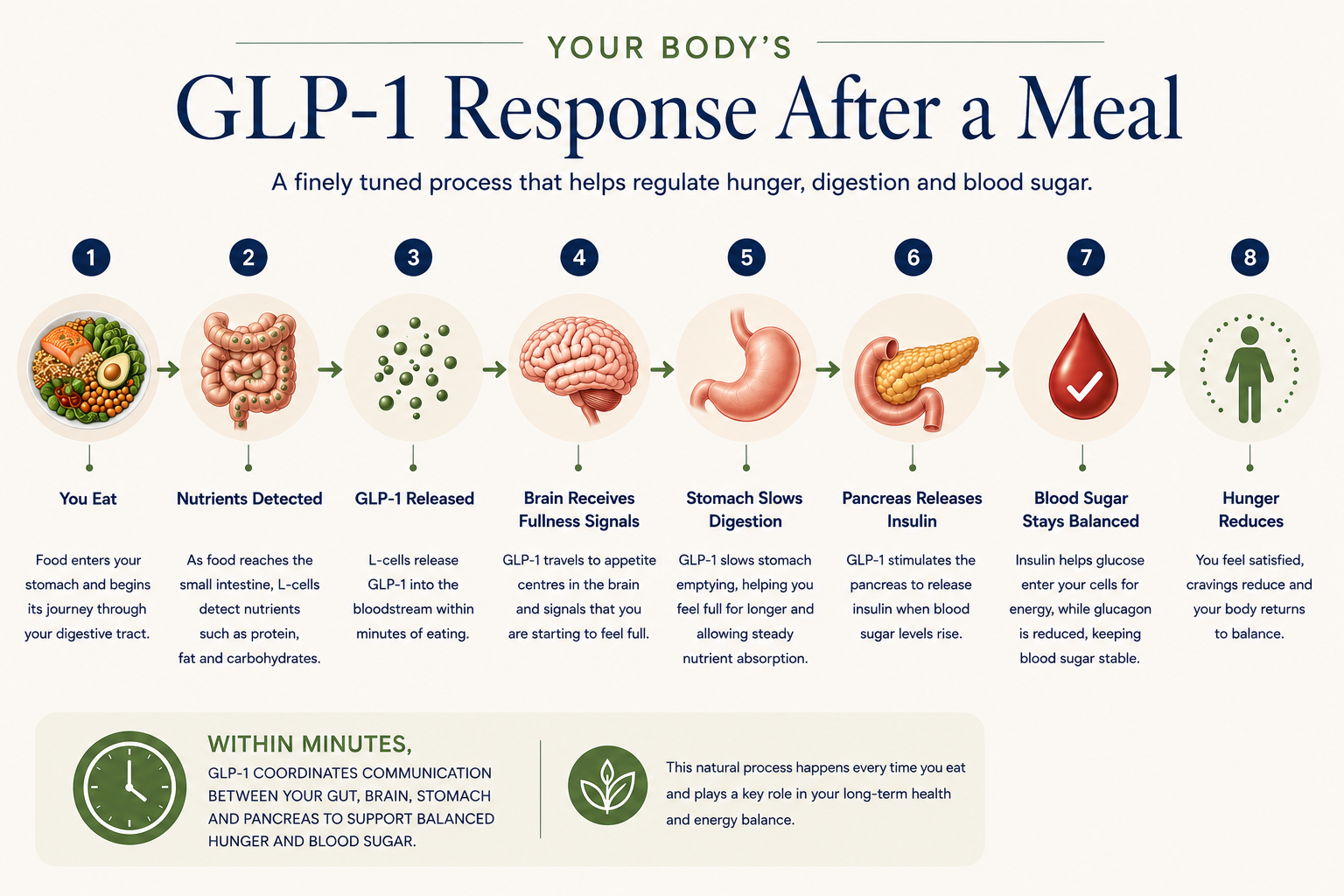
As food moves through your digestive tract, these cells detect the nutrients arriving and begin releasing GLP-1 into the bloodstream.
Different nutrients stimulate GLP-1 to varying degrees, particularly:
- Protein-rich foods
- Dietary fibre
- Healthy fats
- Complex carbohydrates
Once released, GLP-1 travels rapidly throughout the body, delivering messages to several different organs.
Interestingly, natural GLP-1 has a very short lifespan. An enzyme called DPP-4 breaks it down within just a few minutes, meaning your body is constantly producing fresh supplies after meals.
This short lifespan is one of the reasons scientists developed medications that mimic GLP-1 but remain active in the body for much longer.
How Does GLP-1 Work?
One of the fascinating things about GLP-1 is that it doesn't just affect one part of the body. Instead, it coordinates several systems at the same time.
Think of GLP-1 as a conductor leading an orchestra. Each section of the orchestra has its own role, but together they create a balanced performance. In much the same way, GLP-1 helps your digestive system, pancreas and brain work together after every meal.
Let's look at each of these roles in more detail.
GLP-1 and Your Brain
One of GLP-1's best-known jobs is helping regulate appetite.
After eating, GLP-1 travels to appetite centres in the brain, particularly within the hypothalamus. Here it helps signal that you've had enough food, gradually reducing feelings of hunger and increasing feelings of fullness, known as satiety.
This isn't about suddenly switching hunger off. Instead, GLP-1 gently encourages your body to recognise when its energy needs have been met.
For most people, this means:
- Feeling satisfied sooner during a meal
- Staying full for longer afterwards
- Experiencing fewer cravings between meals
- Reducing the desire to continue eating when already satisfied
GLP-1 works alongside several other appetite hormones, including leptin, ghrelin, peptide YY (PYY) and cholecystokinin (CCK). Together they create a complex communication network that helps regulate how much we eat each day.
GLP-1 and Digestion
GLP-1 also changes the way your digestive system handles food.
One of its most important actions is slowing stomach emptying.
Normally, after eating, food gradually moves from the stomach into the small intestine. GLP-1 slows this process slightly, allowing food to remain in the stomach for longer.
This has several important benefits:
- You stay fuller for longer.
- Digestion becomes more gradual.
- Nutrients are absorbed at a steadier rate.
- Blood sugar rises more slowly after meals.
This slower digestion is one of the reasons people taking GLP-1 medications often report eating smaller portions without feeling hungry.
However, digestion that becomes too slow can also contribute to some of the side effects associated with these medicines, something we'll explore in our companion article on GLP-1 medications.
GLP-1 and Blood Sugar
While GLP-1 is often associated with weight management, its original role is actually to help regulate blood glucose.
After a meal, carbohydrates are broken down into glucose, which enters the bloodstream. Rising blood sugar signals the pancreas to release insulin, allowing glucose to move into cells where it can be used for energy.
GLP-1 supports this process in several ways.
It encourages the pancreas to release insulin when blood sugar levels rise, while at the same time reducing the release of glucagon, another hormone that normally tells the liver to release stored glucose into the bloodstream.
Together these actions help keep blood sugar within a healthy range, reducing large spikes after eating.
Importantly, GLP-1 only stimulates insulin release when blood glucose is elevated, helping reduce the risk of blood sugar falling too low in healthy individuals.
GLP-1 Is Part of a Much Bigger Picture
Although GLP-1 has become famous in recent years, it is only one member of an incredibly sophisticated hormone network.
Your appetite is influenced by many signals working together, including:
- Ghrelin, which stimulates hunger before meals.
- Leptin, which reflects the body's long-term energy stores.
- Peptide YY (PYY), released after eating to promote fullness.
- Cholecystokinin (CCK), which responds particularly to protein and healthy fats.
- Insulin, which helps regulate blood sugar and energy storage.
- Cortisol, the body's primary stress hormone, which can also influence appetite.
Rather than relying on a single hormone, your body constantly balances information from all of these signals to help determine when you should eat, how much you need and when you've had enough.
Understanding this bigger picture reminds us that healthy appetite regulation isn't controlled by willpower alone. It's the result of a finely tuned biological system that has evolved over millions of years.

Why Can GLP-1 Signalling Become Less Effective?
Our bodies evolved in an environment where food was relatively scarce, meals were made from whole foods and daily movement was unavoidable. Today, many of us live in a very different world. Highly processed foods, larger portion sizes, sedentary lifestyles, chronic stress and poor sleep can all influence the hormones that regulate appetite and metabolism.
GLP-1 is no exception.
While research is ongoing, studies suggest that several lifestyle factors may reduce the effectiveness of our body's natural appetite regulation over time.
A Diet Low in Fibre
Fibre does much more than keep our digestive system regular. It slows digestion, feeds beneficial gut bacteria and helps stimulate the release of hormones involved in fullness, including GLP-1.
Many people consume significantly less fibre than the recommended 30g per day, meaning they may miss out on some of these natural appetite-regulating benefits.
Highly Processed Foods
Ultra-processed foods are often designed to be easy to eat, highly palatable and quickly digested. They can encourage us to consume more calories before our body's natural satiety signals have time to catch up.
Whole foods, by contrast, generally require more chewing, digest more slowly and often provide a combination of protein, fibre and healthy fats that help support feelings of fullness.
Poor Sleep
Even a few nights of inadequate sleep can influence appetite hormones.
Research has shown that poor sleep can increase hunger, reduce feelings of fullness and make high-calorie foods seem more appealing. Although this involves several hormones, maintaining good sleep habits supports the healthy functioning of the entire appetite regulation system.
Chronic Stress
Stress doesn't just affect our mental wellbeing. It also changes hormone levels throughout the body.
Long-term stress and elevated cortisol may contribute to changes in appetite, food choices and eating behaviours, making it more difficult to maintain healthy eating habits.
Physical Inactivity
Regular movement supports healthy metabolism, insulin sensitivity and overall hormonal balance. Exercise isn't simply about burning calories. It helps many of the body's communication systems function more effectively.
GLP-1 Medications Explained
In recent years, medications that mimic GLP-1 have transformed the treatment of obesity and type 2 diabetes.
Medicines such as Ozempic®, Wegovy® and Mounjaro® work by activating many of the same pathways as the body's natural GLP-1 hormone.
Although each medication works slightly differently, they generally:
- Increase feelings of fullness.
- Reduce appetite.
- Slow stomach emptying.
- Improve blood sugar control.
- Help people consume fewer calories without feeling constantly hungry.
For many individuals living with obesity or type 2 diabetes, these medicines have produced life-changing results, particularly when combined with healthy lifestyle changes.
However, it's important to remember that these medications do not replace the need for good nutrition, regular exercise, adequate sleep and long-term behaviour change. They work best as part of a broader approach to improving health.
Like all medications, they can also cause side effects and may not be suitable for everyone.
In our companion article, GLP-1 Medications: Benefits, Side Effects and How to Stay Healthy Whilst Taking Them, we'll explore these topics in more detail, including practical strategies to help protect muscle mass, maintain good nutrition and reduce common side effects.
Supporting Your Body's Natural GLP-1 Response
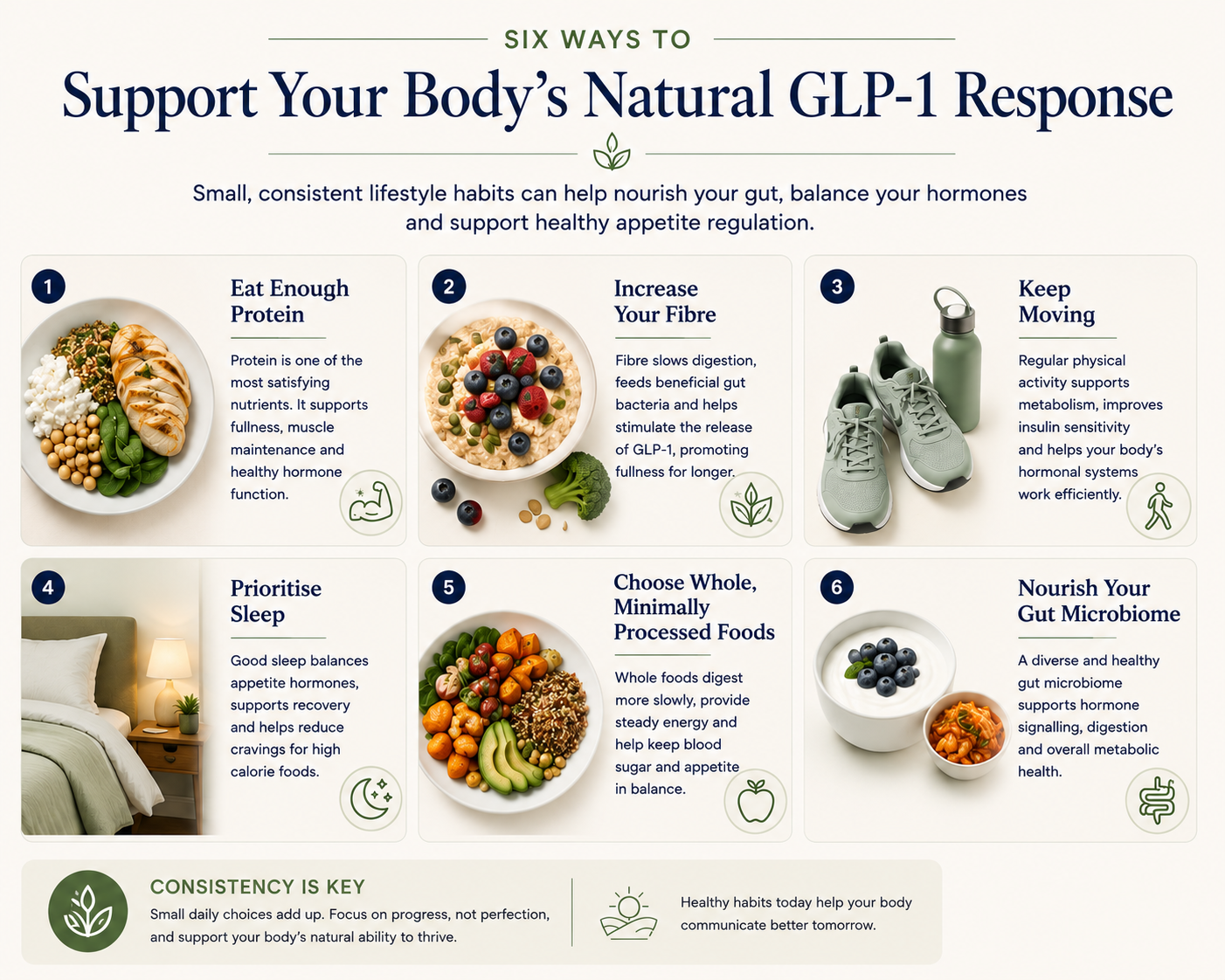
While there is no magic food or supplement that dramatically increases GLP-1 in the same way as prescription medication, research suggests that healthy lifestyle habits can help support your body's natural appetite regulation system.
Rather than focusing on one hormone in isolation, the goal is to create the right conditions for your digestive system, metabolism and brain to work together effectively.
Eat Enough Protein
Protein is one of the most satisfying nutrients we eat. Including a good source of protein with each meal can help promote fullness, support muscle maintenance and contribute to healthy appetite regulation.
Examples include:
- Fish
- Eggs
- Greek yoghurt
- Beans and lentils
- Tofu and tempeh
- Lean poultry
Increase Your Fibre Intake
Fibre helps slow digestion, supports beneficial gut bacteria and contributes to longer-lasting feelings of fullness.
Aim to include a variety of:
- Vegetables
- Fruit
- Wholegrains
- Legumes
- Nuts
- Seeds
Most adults would benefit from gradually increasing their fibre intake while also drinking plenty of water.
Choose Minimally Processed Foods
Meals built around whole foods generally provide a better balance of nutrients, require more chewing and tend to be naturally more filling than highly processed alternatives.
Simple changes, such as replacing refined snacks with fruit, nuts or yoghurt, can make a meaningful difference over time.
Keep Moving
Regular physical activity supports healthy metabolism, improves insulin sensitivity and contributes to overall hormonal health.
The best form of exercise is one you enjoy and can maintain consistently. Walking, resistance training, cycling, swimming and gardening all contribute to better long-term health.
Prioritise Sleep
Adults generally benefit from seven to nine hours of quality sleep each night.
Good sleep helps regulate appetite hormones, improves energy levels and supports healthier food choices throughout the day.
Look After Your Gut Microbiome
Your gut bacteria play an important role in digestion, immune function and hormone signalling.
Eating a diverse range of plant foods, fermented foods and fibre-rich meals helps nourish the beneficial bacteria that support overall digestive health.
What About Supplements?
Food and lifestyle should always form the foundation of healthy appetite regulation. However, some supplements may help support overall metabolic health, blood sugar balance or digestive wellbeing in certain individuals.
These include nutrients such as soluble fibre, omega-3 fatty acids, magnesium and probiotics, although the evidence varies depending on the supplement and the individual.
We'll explore the current research, including what may and may not be helpful, in our companion article Natural Ways to Support Healthy GLP-1 Levels(coming soon).
At Health Mastery, we believe that understanding how your body works is one of the most powerful tools you have. Knowledge empowers better choices, and small, sustainable changes often lead to the greatest long-term improvements in health.
Further Reading
Understanding Your Body
- Understanding the Digestive System
Discover how your digestive tract breaks down food, absorbs nutrients and communicates with the rest of your body. - Understanding the Endocrine System
Learn how hormones regulate metabolism, growth, stress, reproduction and overall health. - Understanding Hunger Hormones(Coming Soon)
Explore how GLP-1, ghrelin, leptin, peptide YY and other hormones work together to regulate appetite.
Healthy Weight & Metabolism
- Natural Ways to Support Healthy GLP-1 Levels(Coming Soon)
- GLP-1 Medications: Benefits, Side Effects and How to Stay Healthy Whilst Taking Them(Coming Soon)
- Coming Off GLP-1 Medication Safely(Coming Soon)
- Understanding Insulin Resistance(Coming Soon)
- The Gut Microbiome Explained(Coming Soon)