
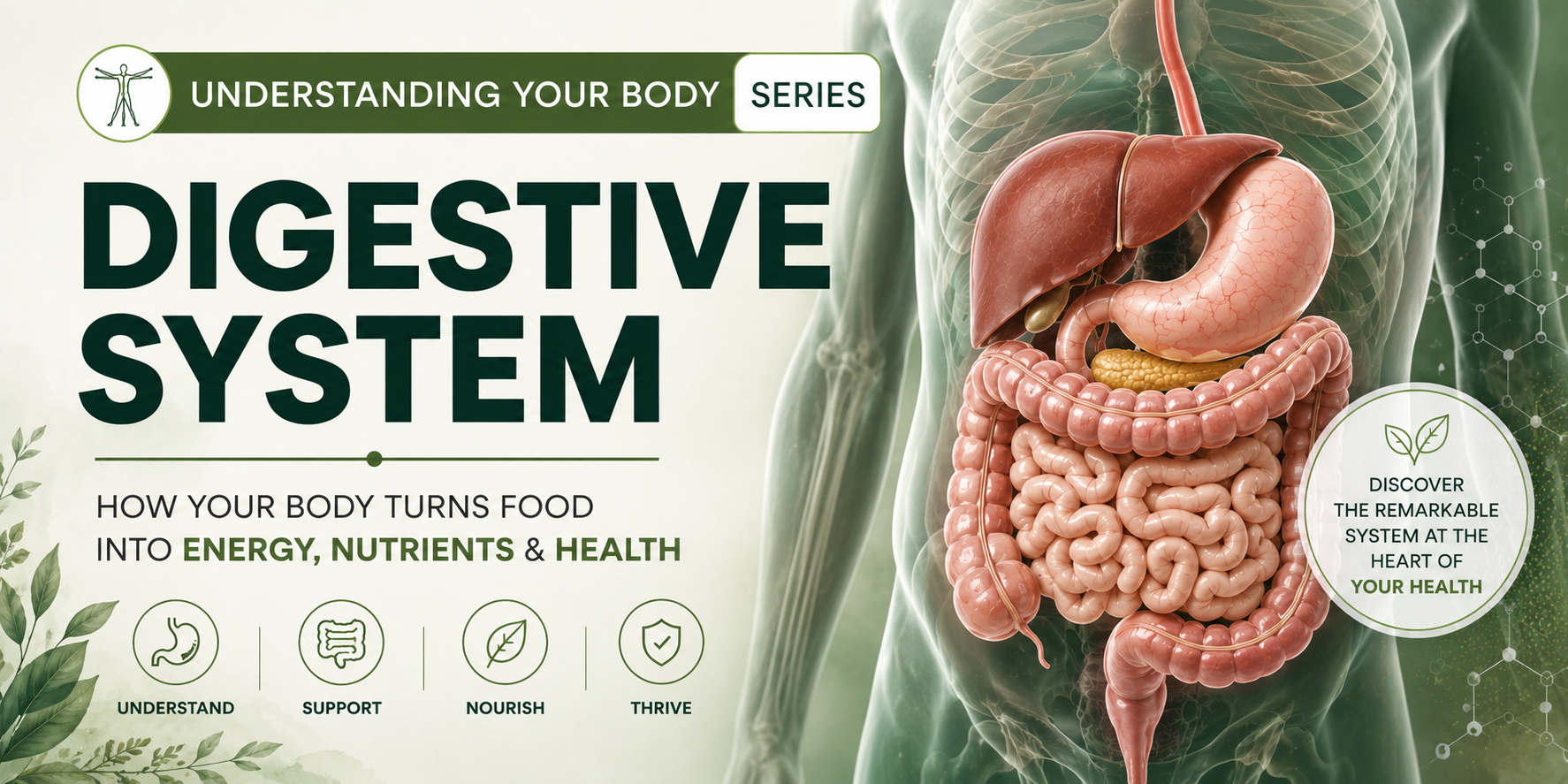
How Your Body Turns Food into Fuel
Have you ever stopped to think about what happens to your food after you've eaten it?
Probably not.
Yet every meal sets off one of the most remarkable processes in the human body. Within seconds of taking your first bite, your brain, stomach, liver, pancreas, intestines, digestive enzymes and trillions of beneficial bacteria all begin working together in perfect harmony.
It's an extraordinary system.
Your digestive system does far more than simply digest food. It extracts the nutrients that fuel every cell in your body, supports your immune system, communicates with your brain, helps regulate hormones and removes waste your body no longer needs.
When it's working well, you rarely notice it.
When it's not, the effects can reach far beyond your stomach. Poor digestion can leave you feeling bloated, sluggish and uncomfortable, while also affecting your energy levels, mood and overall wellbeing.
The good news is that your digestive system is incredibly resilient. By understanding how it works, you'll be much better equipped to support it through the food you eat and the lifestyle choices you make every day.
Let's take a journey through one of the most remarkable systems in your body.
The Incredible Journey of Your Food
Digestion begins long before food reaches your stomach.
In fact, it often starts with your senses.
The sight, smell or even the thought of food tells your brain that a meal is on its way. In response, your body begins producing saliva, digestive enzymes and stomach acid, preparing everything for the work ahead.
It's a beautifully coordinated process that happens automatically without us ever having to think about it.
The Mouth
Your mouth is where digestion begins.
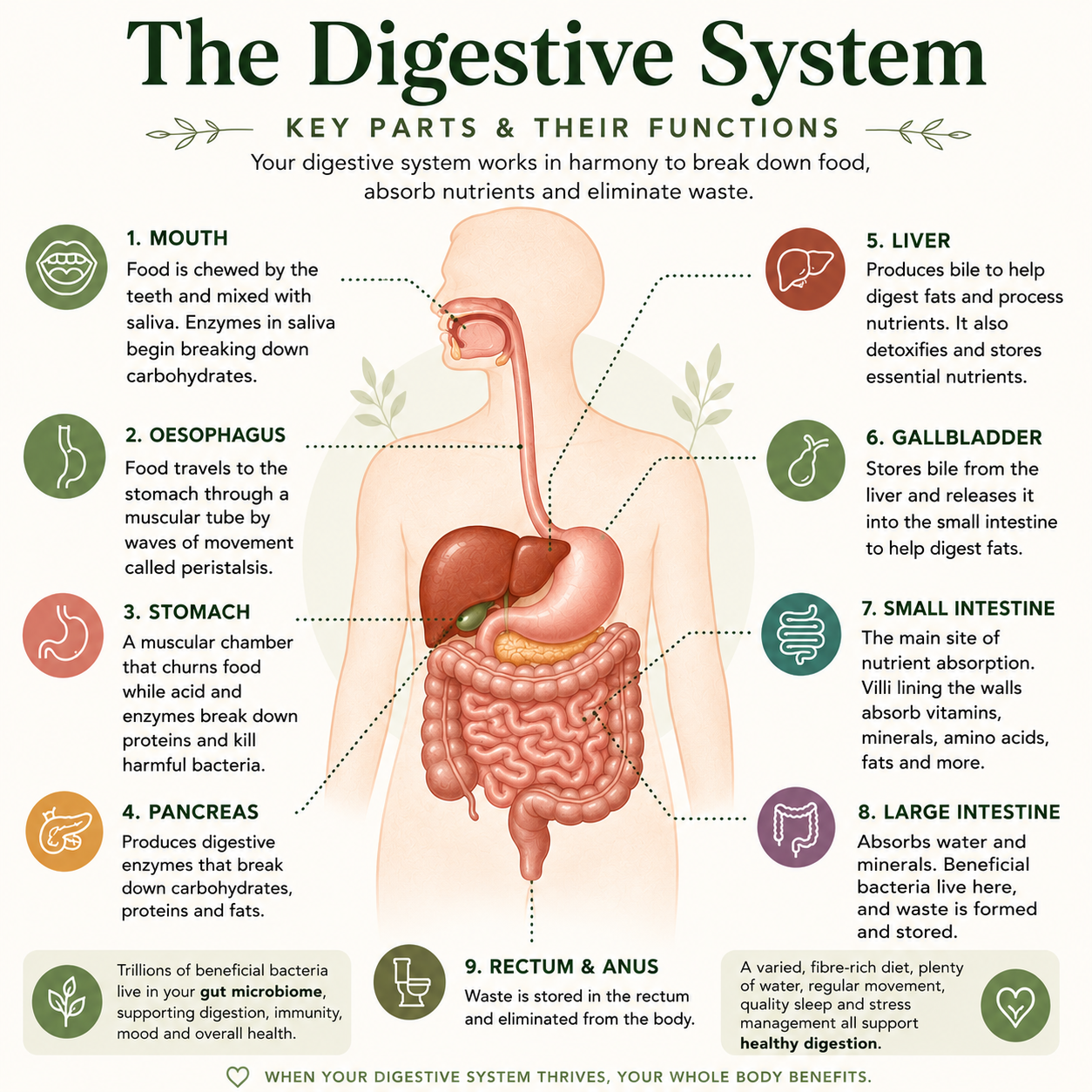
Your teeth break food into smaller pieces while your saliva contains enzymes that immediately begin breaking down carbohydrates.
Chewing thoroughly isn't just good manners. It's one of the simplest ways to support healthy digestion.
The smaller the food particles are when they reach your stomach, the easier they are to digest.
Eating more slowly also gives your brain time to recognise when you're comfortably full, making it less likely you'll overeat.
The Oesophagus
After swallowing, food travels down the oesophagus, a muscular tube connecting your mouth to your stomach.
Food doesn't simply fall into your stomach.
Instead, waves of muscular contractions called peristalsis gently push it along the digestive tract.
This remarkable movement continues throughout your intestines, helping food travel through your entire digestive system.
The Stomach
Your stomach is much more than a storage pouch.
It's a powerful mixing chamber.
Strong muscles churn food while hydrochloric acid and digestive enzymes begin breaking down proteins into smaller building blocks called amino acids.
This highly acidic environment also destroys many unwanted bacteria and microbes that enter your body with food, making your stomach an important part of your natural defence system.
Food usually remains here for two to four hours before moving on.
The Liver, Gallbladder and Pancreas
Although food never actually passes through these organs, digestion couldn't happen properly without them.
Your liver produces bile, which helps your body digest fats.
The gallbladder stores this bile and releases it when fatty foods enter the small intestine.
Meanwhile, your pancreas produces specialised digestive enzymes that break down carbohydrates, proteins and fats into tiny molecules that can be absorbed into your bloodstream.
Think of these three organs as your body's own food processing team, quietly working behind the scenes with every meal you eat.
The Small Intestine
Despite its name, the small intestine is actually around six metres (20 feet) long.
This is where the vast majority of nutrient absorption takes place.
Its inner surface is covered with millions of tiny finger-like projections called villi, dramatically increasing the surface area available to absorb nutrients.
As food passes through, vitamins, minerals, healthy fats, amino acids and other nutrients move through the intestinal wall into your bloodstream, where they're transported to every organ and every cell in your body.
Quite simply, this is where your lunch becomes your energy.
The Large Intestine
Anything your body can't digest continues into the large intestine, also known as the colon.
Here, water and minerals are reabsorbed before the remaining waste is naturally eliminated.
But the colon has another remarkable role.
It's home to trillions of microscopic organisms that are collectively known as your gut microbiome.
Meet Your Gut Microbiome
Inside your digestive system lives an extraordinary community of bacteria, fungi and other microorganisms.
Together, they're known as the gut microbiome.
Although the word "bacteria" often sounds negative, many of these microorganisms are actually beneficial and play an important role in keeping you healthy.
Scientists are still discovering just how important the microbiome really is, but research suggests it helps to:
Support healthy digestion
Break down certain types of dietary fibre
Produce compounds that nourish the lining of your gut
Support normal immune function
Produce certain vitamins, including vitamin K and some B vitamins
Communicate with your brain
One of the most fascinating discoveries in recent years is that diversity matters.
Just like a healthy woodland contains hundreds of different plants and animals, a healthy gut appears to benefit from a wide variety of different microorganisms.
One of the easiest ways to encourage this diversity is by eating a varied diet rich in whole plant foods.
Different vegetables, fruits, herbs, beans, seeds and whole grains provide different types of fibre that feed different groups of beneficial bacteria.
That's one of the reasons we encourage people to eat the rainbow. It's not just good for you, it's good for the trillions of tiny organisms working hard inside you every day.
Your Gut and Brain Link
Have you ever experienced butterflies before giving a presentation?
Lost your appetite during a stressful week?
Or had a strong "gut feeling" that something just didn't seem right?
These aren't just expressions.
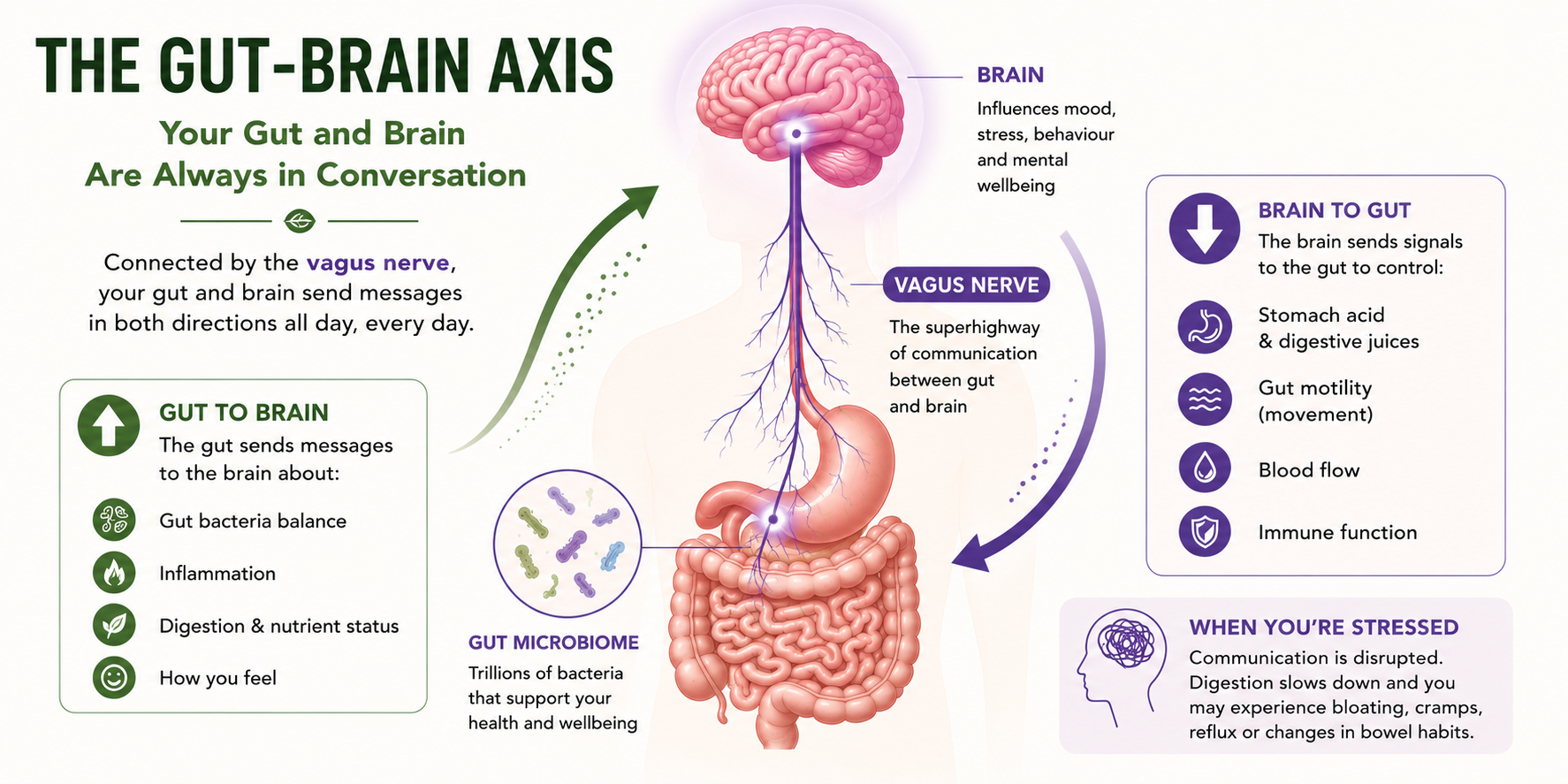
Your digestive system and your brain are in constant communication through a network known as the gut-brain axis.
One of the main communication routes is the vagus nerve, often described as a superhighway connecting your brain and digestive system.
Messages travel in both directions all day, every day.
Your gut microbiome also plays a role in this conversation, producing chemical messengers that researchers believe influence how your gut and brain interact.
Although scientists are still learning exactly how this complex relationship works, it's becoming increasingly clear that our digestive health and mental wellbeing are closely connected.
This also helps explain why stress can have such a noticeable effect on digestion.
When we're relaxed, our body is happy to spend energy digesting food.
When we're stressed, however, our nervous system shifts into "fight or flight" mode. Blood flow is redirected towards our muscles, digestion slows down and many people notice symptoms such as indigestion, bloating or changes in bowel habits.
This is why looking after your mental wellbeing can also help support a healthier digestive system.
Your brain and your gut really are part of the same conversation.
What Can Disrupt a Healthy Digestive System?
Your digestive system is remarkably adaptable, but modern lifestyles can sometimes make its job more difficult.
Understanding what disrupts digestion is just as important as knowing how to support it.
Ultra-Processed Foods
Ultra-processed foods are often low in fibre and high in refined carbohydrates, unhealthy fats, added sugars and artificial ingredients.
While there's nothing wrong with enjoying them occasionally, relying on them day after day can crowd out the whole foods that nourish both you and your gut microbiome.
Too Much Added Sugar
Many beneficial gut bacteria thrive on the fibre found in whole plant foods.
Diets high in added sugars and ultra-processed foods have been associated with changes in the balance of the gut microbiome. Choosing whole foods more often and limiting sugary snacks can help create a healthier environment for beneficial bacteria to flourish.
Too Little Fibre
Around nine in ten adults in the UK don't eat enough fibre.
Yet fibre is one of the most important nutrients for digestive health.
Not only does it help food move through your digestive system, it also provides nourishment for many of the beneficial bacteria living in your gut.
Aim to include a wide variety of vegetables, fruit, legumes, whole grains, nuts and seeds throughout the week.
Chronic Stress
Stress affects far more than your mood.
Long periods of stress can slow digestion, alter appetite and contribute to digestive discomfort because your body naturally prioritises survival over digestion.
This is one of the many reasons why caring for your mental wellbeing is also an important part of supporting your digestive health.
Supporting Your Digestive System Naturally
The good news is that your digestive system is incredibly responsive to positive lifestyle changes.
Small, consistent habits can make a meaningful difference over time.
Eat More Prebiotic Foods
Prebiotics are types of fibre that feed the beneficial bacteria already living in your gut.
Excellent sources include onions, garlic, leeks, asparagus, oats, bananas, chicory root and Jerusalem artichokes.
Think of prebiotics as fertiliser for your gut garden. They help beneficial bacteria thrive.
Include Probiotic Foods
Probiotics are live beneficial microorganisms found in fermented foods such as natural yoghurt, kefir, sauerkraut, kimchi and miso.
Including these foods regularly may help support a diverse and healthy gut microbiome.
For some people, probiotic supplements may also be appropriate, particularly after a course of antibiotics or under the guidance of a healthcare professional.
Support Healthy Digestion with Digestive Enzymes
Your body naturally produces digestive enzymes to break down carbohydrates, proteins and fats. These enzymes are released in your saliva, stomach and pancreas and are essential for extracting nutrients from the food you eat.
Most healthy people produce enough digestive enzymes naturally. However, some people choose to supplement with digestive enzymes, particularly as they get older or during periods of digestive discomfort, to help support the normal breakdown of food.
Don't Forget Vitamins and Minerals
Digestive health relies on many essential nutrients.
Vitamin D contributes to the normal function of the immune system, while zinc supports normal metabolism and cell function. Magnesium plays an important role in hundreds of processes throughout the body, including normal muscle function, which also affects the digestive tract.
The best place to obtain these nutrients is through a balanced, varied diet, although supplements may be appropriate where deficiencies exist.
Drink Enough Water
Water helps food move smoothly through your digestive tract and works alongside fibre to support regular bowel movements.
Aim to drink consistently throughout the day rather than waiting until you feel thirsty.
Stay Active
Regular movement helps keep your digestive system moving too.
Whether it's walking, cycling, gardening or swimming, daily physical activity supports healthy bowel function and overall wellbeing.
How Supplements Can Support Your Digestive Health
At Health Mastery, we believe the foundation of good digestive health starts with eating a varied, fibre-rich diet, staying active, managing stress and getting enough sleep. Supplements should complement these healthy habits, not replace them.
Pre + Pro 15
A healthy digestive system depends on a thriving gut microbiome. Pre + Pro 15 combines carefully selected probiotics with prebiotic fibre, helping to nourish beneficial bacteria and support a balanced gut environment. It's an easy way to complement a healthy, varied diet and support your digestive wellbeing.
Enzymes+
Digestive enzymes are essential for breaking down the proteins, carbohydrates and fats in the food you eat. While your body naturally produces these enzymes, some people choose to supplement with digestive enzymes to help support their body's natural digestive processes. Enzymes+ provides a broad-spectrum blend of plant-based digestive enzymes to support the efficient breakdown of food.
Whether you're looking to support your gut microbiome, maintain healthy digestion or simply build stronger nutritional foundations, we offer a carefully selected range of digestive health products to help support your journey.
Explore our full Digestive Health range to discover probiotics, digestive enzymes and other nutritional products designed to support your digestive health and overall wellbeing.
Every person is different, and no single supplement is right for everyone. That's why we always encourage people to begin with the fundamentals: eating well, staying active, managing stress and building healthy habits for the long term.