
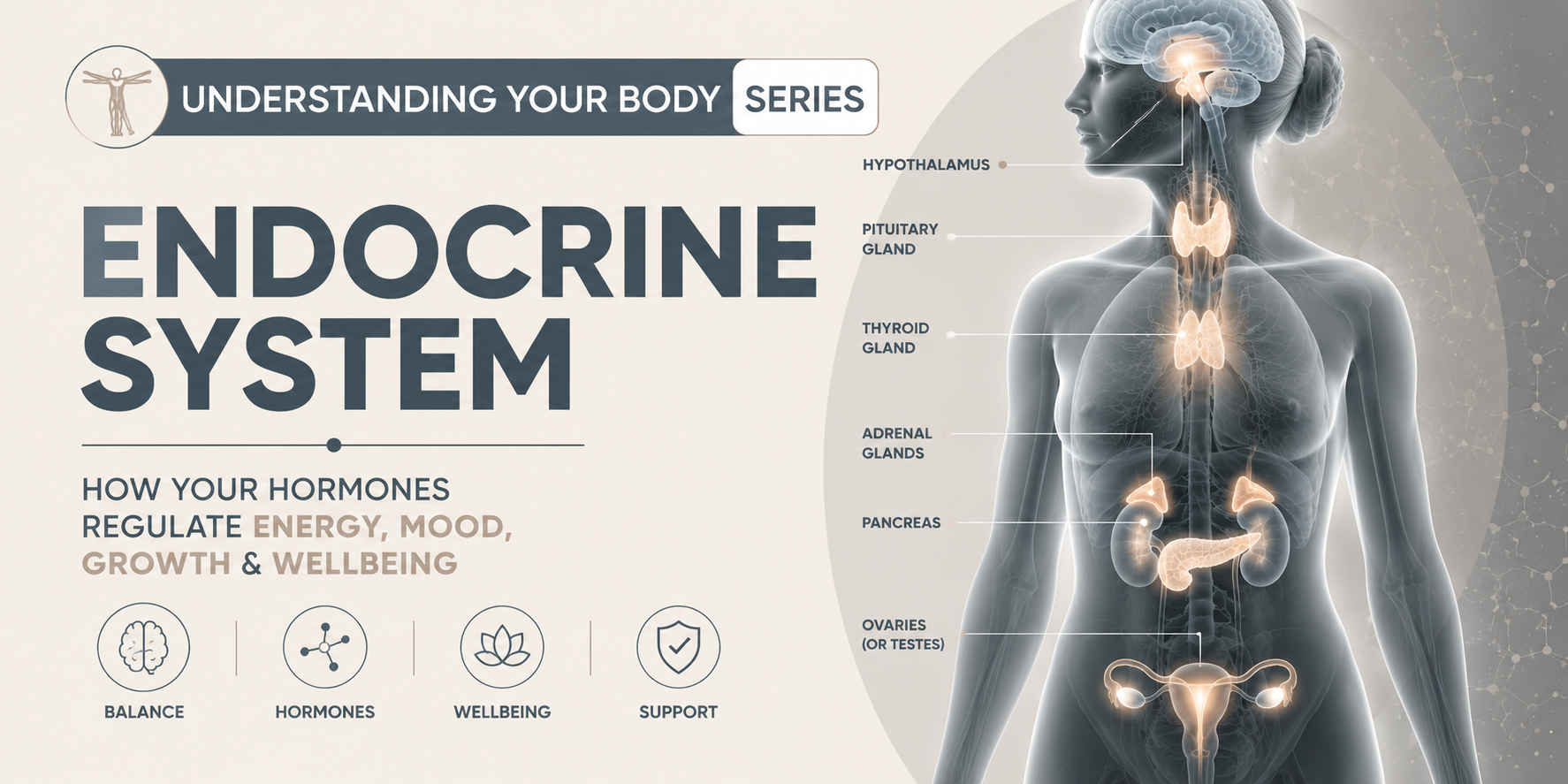
Understanding the Endocrine System
How your hormones regulate everything from metabolism and mood to sleep, appetite and growth.
Introduction
The endocrine system is one of the body's two main communication systems. While the nervous system sends rapid electrical signals through nerves, the endocrine system sends slower chemical messages in the form of hormones. Together, these two systems work constantly to keep the body functioning normally and maintain a stable internal environment.
From how hungry you feel before lunch to how well you sleep at night, your hormones are working behind the scenes every minute of every day. They help regulate your metabolism, energy levels, growth, reproduction, mood, stress response, body temperature, blood sugar and much more.
Although hormones are only needed in tiny amounts, even small changes in their balance can have noticeable effects on how we feel. Understanding how the endocrine system works can help you make informed lifestyle choices that support your long-term health and wellbeing.
What Is the Endocrine System?
The endocrine system is a network of glands that produce and release hormones.
Hormones are chemical messengers. Once released into the bloodstream, they travel throughout the body until they reach specific cells that contain receptors designed to receive their message. These messages tell different parts of the body what to do and when to do it.
Unlike the nervous system, which produces almost immediate responses, hormones generally work over minutes, hours or even days. This makes them ideal for controlling longer-term functions such as growth, metabolism, reproduction and maintaining balance throughout the body.
This balance is known as homeostasis – the body's remarkable ability to keep its internal environment stable despite constant changes in the outside world.
The Main Endocrine Glands
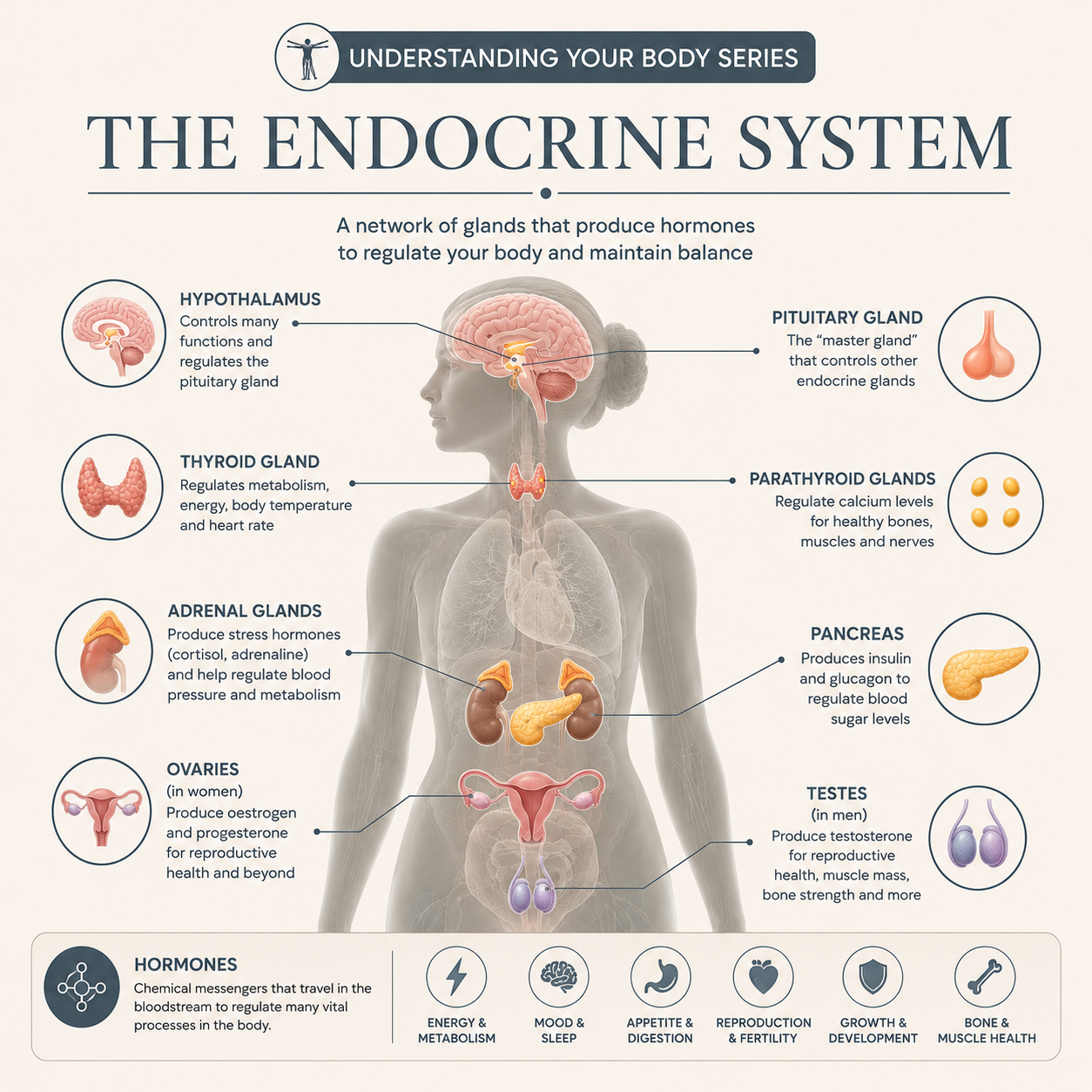
The endocrine system is made up of several glands, together with the hypothalamus, a specialised region of the brain that controls many of them. Each gland produces hormones that help regulate different aspects of health.
Hypothalamus
Located deep within the brain, the hypothalamus is not actually a gland but a specialised region of the brain that links the nervous system and the endocrine system. It constantly monitors the body's internal environment and communicates with the pituitary gland, helping regulate body temperature, hunger, thirst, sleep, stress responses and many other essential functions.
Pituitary Gland
About the size of a pea and situated just beneath the hypothalamus at the base of the brain, the pituitary gland is often known as the "master gland." It releases hormones that control many other endocrine glands, including the thyroid, adrenal glands and reproductive organs.
Thyroid Gland
Located at the front of the neck, just below the voice box, the thyroid produces hormones that regulate metabolism, body temperature, heart rate and energy production.
Parathyroid Glands
These four tiny glands sit behind the thyroid gland. Their main role is to regulate calcium levels, which are essential for healthy bones, muscles and normal nerve function.
Adrenal Glands
The adrenal glands sit on top of each kidney. They produce hormones including cortisol and adrenaline, helping the body respond to stress while also regulating blood pressure, metabolism and the body's response to illness.
Pancreas
Located behind the stomach in the upper abdomen, the pancreas performs two important jobs. It produces digestive enzymes that help break down food, but it also acts as an endocrine gland by releasing insulin and glucagon into the bloodstream to regulate blood sugar levels.
Pineal Gland
Found near the centre of the brain, the pineal gland produces melatonin, a hormone that helps regulate the body's natural sleep-wake cycle.
Ovaries and Testes
The ovaries in women and the testes in men produce hormones including oestrogen, progesterone and testosterone. These hormones influence puberty, fertility, bone health, muscle mass, sexual development and many other aspects of health throughout life.
What Do Hormones Do?
Hormones influence almost every major function within the body, including:
Growth and development
Metabolism
Blood sugar regulation
Fertility and reproduction
Mood and emotional wellbeing
Sleep
Stress responses
Appetite and fullness
Bone health
Muscle development
Heart rate
Body temperature
Because hormones affect so many different systems, changes in one hormone can often influence many other areas of health.
Key Hormones Explained
There are dozens of hormones working together every day. Some of the most important include:
Insulin
Produced by the pancreas, insulin allows glucose (sugar) to move from the bloodstream into the body's cells where it can be used for energy. It plays a vital role in maintaining healthy blood sugar levels.
Glucagon
Glucagon works alongside insulin. When blood sugar falls between meals, glucagon signals the liver to release stored glucose, helping maintain a steady supply of energy.
Thyroid Hormones (T3 and T4)
Produced by the thyroid gland, these hormones regulate metabolism, body temperature, heart function and the rate at which the body uses energy.
Cortisol
Often called the stress hormone, cortisol helps the body respond to physical and emotional stress. It also plays important roles in regulating blood pressure, metabolism, immune function and inflammation.
Adrenaline
Released during stressful situations, adrenaline prepares the body for action by increasing heart rate, breathing and blood flow to the muscles.
Melatonin
Produced mainly during the evening, melatonin helps regulate the body's natural sleep cycle and supports healthy circadian rhythms.
Serotonin
Although serotonin is often referred to as a neurotransmitter, it also acts as an important chemical messenger throughout the body. It helps regulate mood, sleep, appetite and digestion. Interestingly, around 90% of the body's serotonin is produced in the digestive tract, highlighting the close connection between the digestive and endocrine systems.
Oestrogen and Progesterone
These hormones regulate the menstrual cycle, fertility and pregnancy while also supporting bone health, skin health, cardiovascular health and many aspects of female wellbeing.
Testosterone
Although commonly associated with men, testosterone is important for both men and women. It supports muscle mass, bone strength, energy levels, libido and overall vitality.
Growth Hormone
Produced by the pituitary gland, growth hormone supports growth during childhood and continues throughout adult life by helping maintain healthy muscles, bones and tissue repair.
Produced by the pituitary gland, growth hormone supports growth during childhood and continues throughout adult life by helping maintain healthy muscles, bones and tissue repair.
Hunger, Fullness and the Gut-Hormone Connection
One of the most exciting areas of modern research is how closely the digestive system and endocrine system work together.
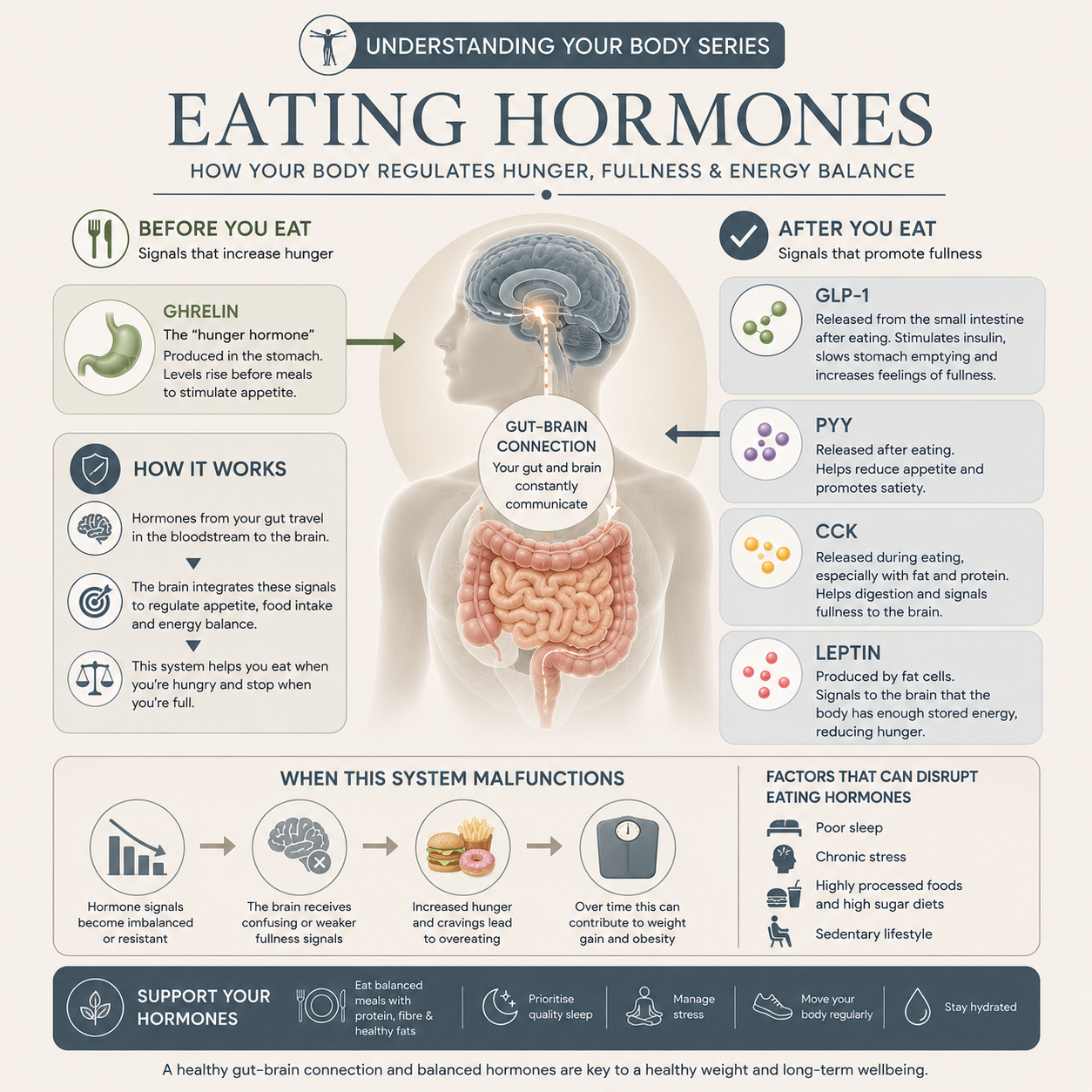
The gut doesn't simply digest food. It also produces hormones that communicate directly with the brain, helping regulate hunger, fullness, blood sugar and energy balance.
Ghrelin
Often called the hunger hormone, ghrelin is mainly produced in the stomach. Levels rise before meals, telling the brain it's time to eat, before falling again after food has been consumed.
Leptin
Produced by fat cells, leptin signals to the brain that the body has enough stored energy. It plays an important role in long-term appetite regulation.
GLP-1
Glucagon-like peptide-1 (GLP-1) has become widely known because of new weight management medications. However, GLP-1 is actually a hormone your body naturally produces every time you eat.
Released by the small intestine after a meal, GLP-1 helps stimulate insulin release, slows stomach emptying and increases feelings of fullness. Together, these actions help regulate appetite and maintain healthy blood sugar levels.
PYY
Peptide YY is another hormone released after eating. It helps reduce appetite and contributes to feelings of satiety after meals.
CCK
Cholecystokinin (CCK) is released when we eat, particularly after meals containing healthy fats and protein. It helps coordinate digestion while also signalling fullness to the brain.
Together, these hormones form part of what scientists call the gut-brain axis – a remarkable communication network linking the digestive system, endocrine system and nervous system.
This helps explain why balanced meals containing protein, fibre and healthy fats often leave us feeling fuller for longer. It also helps explain why poor sleep, chronic stress and diets high in ultra-processed foods can influence appetite, cravings and energy levels.
Hormones Change Throughout Life
Our hormones are constantly changing as we move through different stages of life.
During childhood, hormones drive growth and development. At puberty, rising levels of sex hormones trigger the physical and emotional changes that prepare the body for adulthood.
Throughout adult life, hormones continue to influence fertility, metabolism, mood, sleep, energy levels and bone health.
Pregnancy brings about some of the most significant hormonal changes the body experiences, while later life sees gradual changes in hormones such as oestrogen, progesterone and testosterone.
For women, menopause is a natural transition marked by declining levels of oestrogen and progesterone. Common symptoms include hot flushes, night sweats, disturbed sleep, mood changes and reduced bone density. Men also experience gradual hormonal changes as testosterone levels slowly decline with age.
These changes are a normal part of life, and while they cannot be prevented, healthy lifestyle choices can help support wellbeing throughout every stage.
Supporting Your Endocrine System
While hormones naturally fluctuate throughout life, there are many lifestyle habits that support healthy endocrine function.
Eat a Balanced Diet
A varied diet rich in vegetables, fruit, wholegrains, healthy fats and quality protein provides many of the nutrients involved in normal hormone production.
Exercise Regularly
Regular physical activity supports metabolism, insulin sensitivity, cardiovascular health and overall hormonal balance.
Prioritise Sleep
Many hormones follow a daily rhythm. Good-quality, consistent sleep helps support these natural hormonal cycles.
Manage Stress
Short periods of stress are a normal part of life, but long-term stress may influence cortisol production and other hormonal pathways. Spending time outdoors, exercising, practising relaxation techniques and maintaining strong social connections can all support overall wellbeing.
Endocrine Disruptors
Because hormones work at incredibly low concentrations, scientists have become increasingly interested in substances that may interfere with their normal signalling.
These substances are known as endocrine-disrupting chemicals (EDCs).
Some endocrine disruptors may mimic natural hormones, while others may block hormone receptors or alter how hormones are produced, transported or broken down. Research into their long-term effects is ongoing, but many people choose to reduce unnecessary exposure where practical.
Potential sources include certain plastics, food packaging, pesticides, cosmetics, household cleaning products and some personal care products.
If you'd like to explore this fascinating topic in more detail, our sister company, The Green Woman, has produced an in-depth guide explaining endocrine disruptors, where they may be found, what current research tells us, and practical ways to reduce unnecessary everyday exposure.
Nutrition and Supporting Hormone Health
Hormones are made from the nutrients we eat, making good nutrition one of the foundations of a healthy endocrine system.
Eating a balanced diet that includes adequate protein, healthy fats, fibre, vitamins and minerals provides the building blocks needed for normal hormone production while supporting healthy blood sugar regulation, energy levels and overall wellbeing.
For some people, supplements may also complement a healthy lifestyle.
At Health Mastery, we believe supplements should work alongside healthy habits rather than replace them.
5-HTP Formula
For those looking to support mood and sleep, our 5-HTP Formula combines 5-hydroxytryptophan (5-HTP) with L-tryptophan, together with vitamins B6 and B12, which contribute to the normal functioning of the nervous system. Tryptophan is used by the body to produce serotonin, which can then be converted into melatonin, making these important compounds in the body's natural mood and sleep pathways.
Menopause Support Formula
Women experiencing the natural hormonal changes associated with menopause may also wish to explore our Menopause Support formula. This carefully selected blend of traditional botanicals has been developed to support wellbeing during this important stage of life.
As with all supplements, they work best alongside a nutritious diet, regular physical activity, restorative sleep and effective stress management.
Key Takeaways
The endocrine system quietly coordinates almost every aspect of human health, from growth and metabolism to mood, sleep, appetite and reproduction.
Healthy hormones rely on many factors working together, including good nutrition, regular movement, restorative sleep, stress management and healthy lifestyle choices.
By understanding how your endocrine system works, you can make informed decisions that support your body's remarkable natural balance throughout every stage of life.
Further Reading
If you found this article helpful, you may also enjoy: