
Understanding The Lymphatic System
The Body's Natural Cleaning and Defence Network
When most people think about the body's circulatory system, they think of the heart pumping blood around the body. But did you know you have another vital transport system working quietly alongside it?
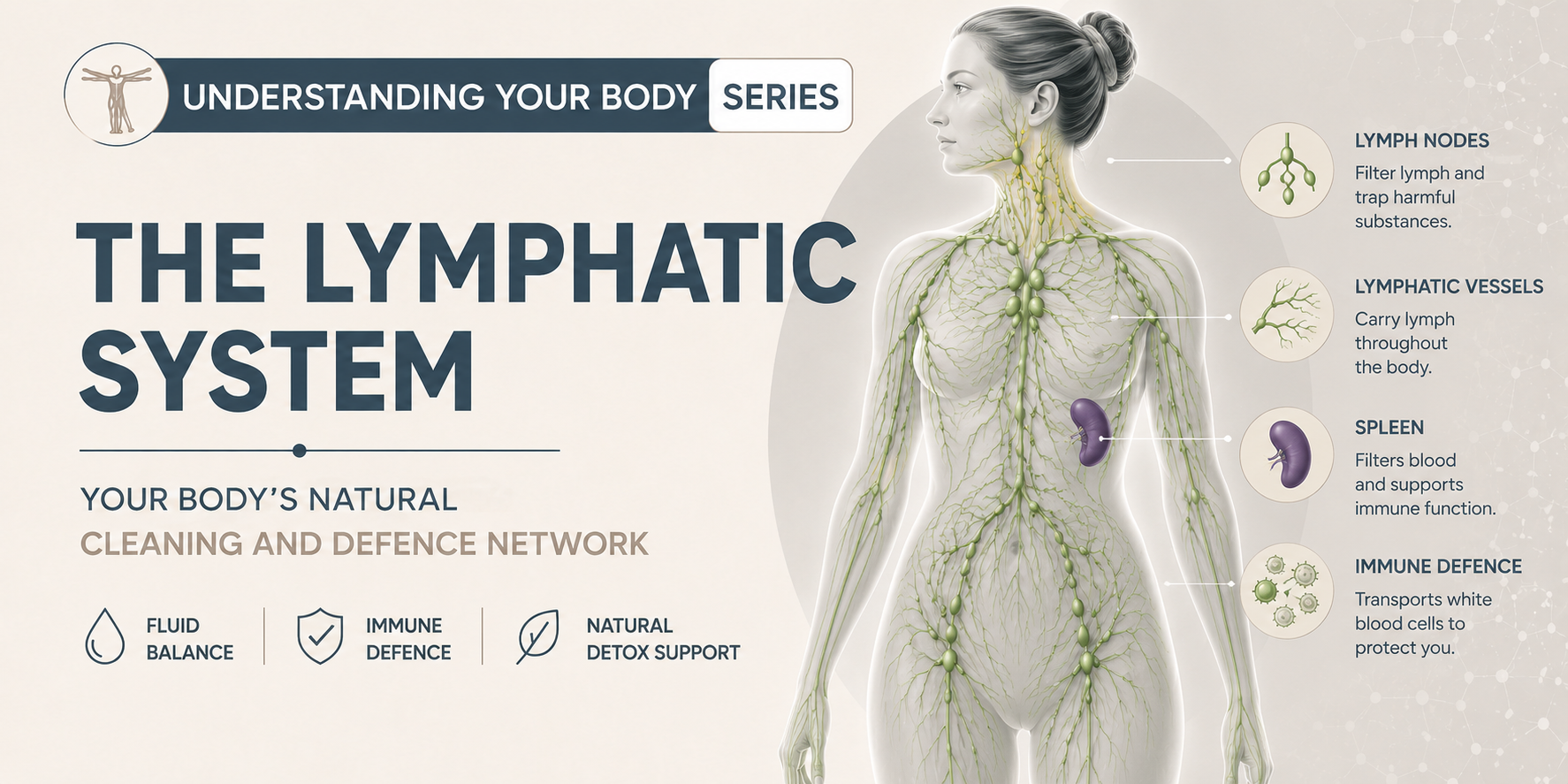
The lymphatic system is a remarkable network of vessels, lymph nodes and organs that helps maintain fluid balance, supports your immune system and assists your body's natural waste removal processes. Unlike your cardiovascular system, however, it has no central pump.
Instead, it relies heavily on one simple thing...
Movement.
Every walk, stretch, deep breath and arm swing helps keep your lymph flowing. That's why regular movement isn't just good for your muscles and heart. It's essential for your lymphatic system too.
What Is the Lymphatic System?
The lymphatic system is a network of tiny vessels, lymph nodes and organs that extends throughout almost every part of your body.
Its main roles are to:
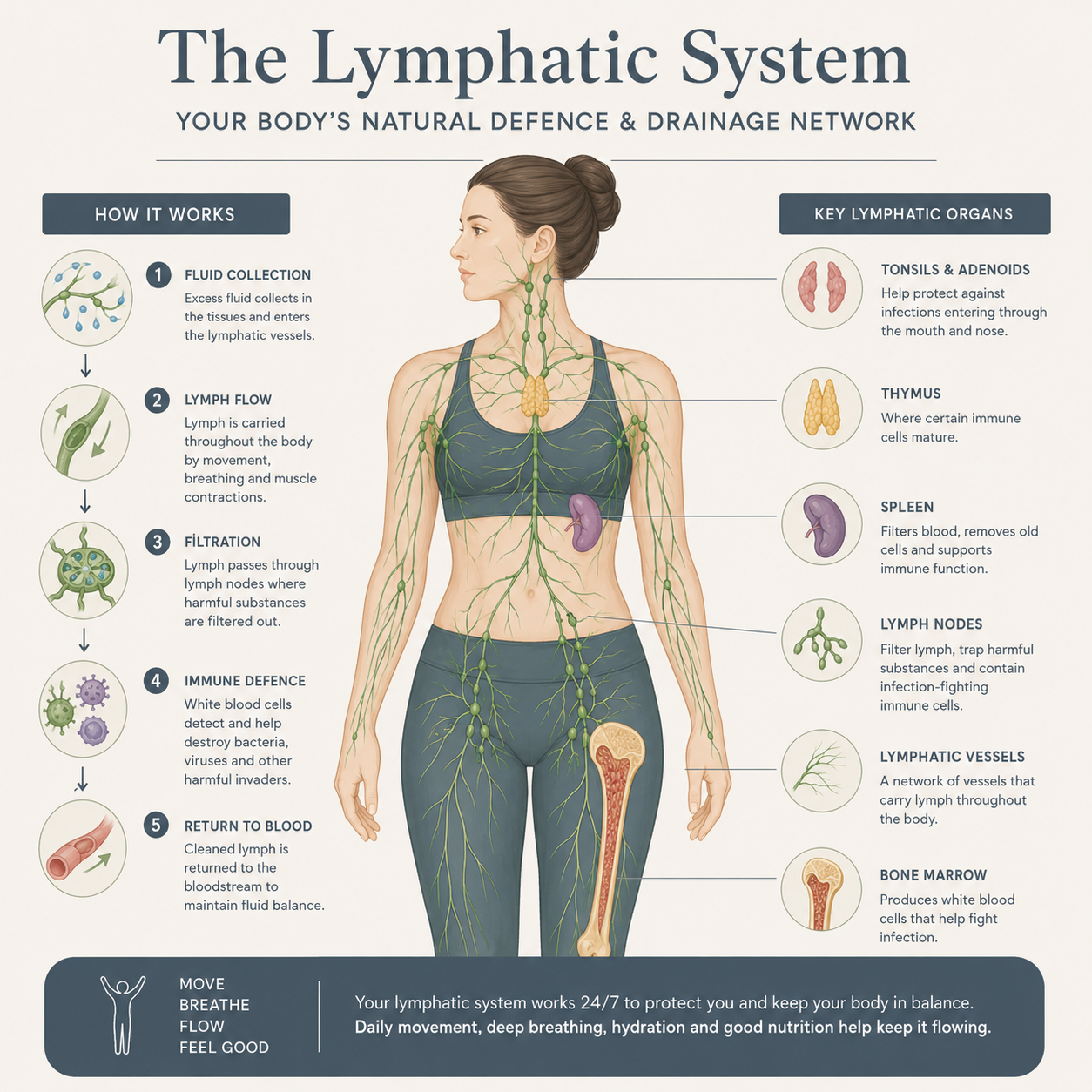
Collect excess fluid that naturally leaks from your bloodstream into your tissues.
Return that fluid back into your bloodstream.
Transport infection-fighting white blood cells around the body.
Filter bacteria, viruses and other unwanted substances.
Support your immune system.
Absorb fats and fat-soluble vitamins from your digestive system.
Without the lymphatic system, fluid would accumulate around your cells, your immune system would struggle to respond effectively to infections, and your body would find it much harder to maintain healthy tissues.
What Is Lymph?
Lymph is a clear, slightly yellow fluid that circulates through your lymphatic vessels.
It contains:
- Water
- Proteins
- White blood cells (particularly lymphocytes)
- Cellular waste products
- Bacteria and viruses captured by your immune system
- Fats absorbed from your digestive tract
As lymph passes through lymph nodes, harmful substances are filtered out before the cleaned fluid is eventually returned to your bloodstream.
The Lymphatic System Doesn't Have a Pump
One of the most fascinating things about the lymphatic system is that, unlike your heart pumping blood around your body, it has no pump of its own.
Instead, lymph moves because of:
Muscle contractions when you move
Deep breathing
Everyday body movements
Gentle contractions of the lymph vessel walls
Changes in body position
This means that spending long periods sitting still can slow lymph flow.
Regular movement is one of the simplest and most effective ways to support this remarkable system.
|
Your Lymph Nodes: The Body's Security Checkpoints
Throughout your body are hundreds of small lymph nodes.
These act like security checkpoints, filtering lymph as it passes through.
Inside each lymph node are specialised immune cells that recognise and destroy bacteria, viruses and other harmful substances before they can spread further through the body.
You have clusters of lymph nodes in several areas, including:
Your neck
Under your arms
Your chest
Your abdomen
Your groin
If you've ever noticed swollen glands when you've had a sore throat or infection, those are your lymph nodes working hard to support your immune system.
Organs That Form Part of the Lymphatic System
The lymphatic system is made up of much more than lymph vessels and nodes.
Several organs also play important roles, including:
Bone marrow, where many immune cells are produced.
The thymus, where certain white blood cells mature.
The spleen, which filters blood and supports immune function.
The tonsils and adenoids, which help defend against infections entering through the mouth and nose.
Together, these structures form an important part of your body's natural defence network.
The Lymphatic System and Your Immune Health
One of the lymphatic system's most important jobs is supporting your immune system.
It continually transports white blood cells around your body, allowing them to detect and respond to viruses, bacteria and other harmful invaders.
It also acts as a surveillance network, helping your immune system recognise when something isn't right.
Healthy lifestyle habits that support your immune system are therefore also likely to support healthy lymphatic function.
Does the Lymphatic System "Detox" the Body?
You'll often hear people say the lymphatic system "flushes toxins" from the body.
While this isn't entirely wrong, it's an oversimplification.
The lymphatic system collects excess fluid, proteins, cellular waste and immune debris from your tissues before returning them to your bloodstream.
Your liver and kidneys then process and remove many of these waste products from your body.
Rather than acting as your body's detox organ itself, the lymphatic system works alongside your liver and kidneys as part of your body's natural waste removal processes.
How to Support Your Lymphatic System Naturally
Because the lymphatic system has no central pump, it depends heavily on your own movement to keep lymph flowing.
Fortunately, supporting it doesn't require anything complicated. Small daily habits can make a real difference.
To help keep your lymphatic system working efficiently:
Walk every day, even if it's just for 20–30 minutes.
Stretch regularly, particularly if you spend long periods sitting.
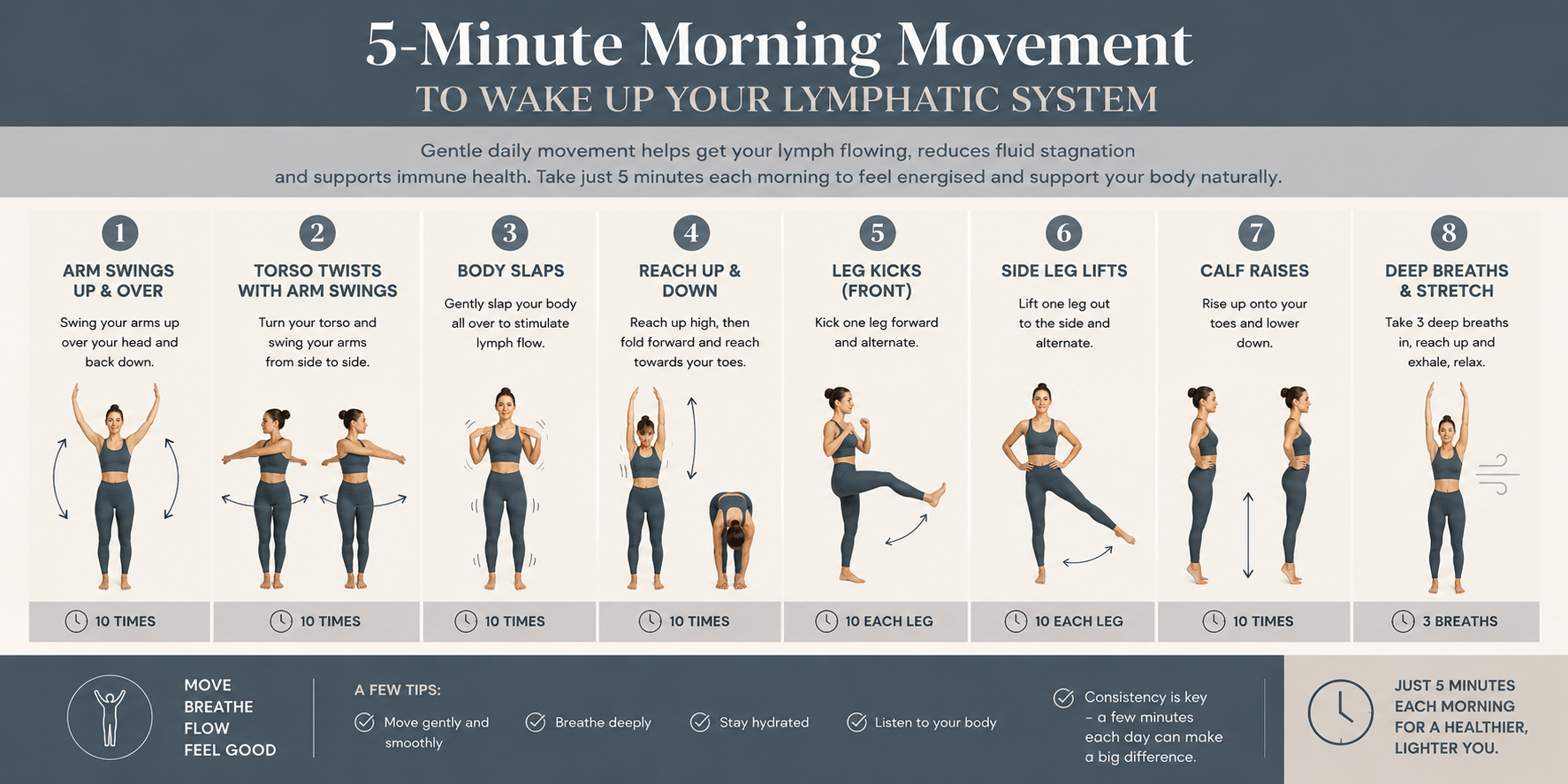
Begin your morning with a few minutes of gentle movement such as arm swings, shoulder rolls, marching on the spot or gentle twists to help wake up your body after sleep.
Take regular movement breaks throughout the day if you work at a desk.
Include activities such as swimming, yoga, dancing or gardening as part of an active lifestyle.
Practise deep breathing, which naturally helps encourage lymph movement through the chest.
Stay well hydrated.
Eat a varied, nutrient-rich diet.
Prioritise good quality sleep.
Manage stress where possible.
Below you'll find a simple morning lymph wake-up infographic that you can follow in just a few minutes each day.
The good news is that the very same habits that support your lymphatic system are also some of the best things you can do for your overall health.
What Can Affect Your Lymphatic System?
Like every body system, the lymphatic system functions best when supported by healthy lifestyle habits.
Factors that may negatively affect lymphatic health include:
Physical inactivity
Carrying excess body weight
Smoking
Chronic stress
Poor sleep
Dehydration
Damage to or removal of lymph nodes following surgery or radiotherapy
Researchers are also investigating how long-term exposure to environmental pollutants, including persistent chemicals and microplastics, may influence inflammation and immune health. While this is an active area of research, there is currently limited evidence that these substances directly impair lymphatic function.
Some people also choose natural deodorants instead of aluminium-based antiperspirants as part of an approach to reducing unnecessary chemical exposure, particularly because clusters of lymph nodes are located in the underarm area. At present, however, research has not demonstrated that antiperspirants impair lymphatic function.
Overall, the strongest evidence continues to support regular movement, maintaining a healthy weight, staying hydrated and living an overall healthy lifestyle.
Nutrition and Nutritional Supplements for a Healthy Lymphatic System
There is no special "lymph detox" diet, but your lymphatic system does rely on your body receiving the nutrients it needs to support healthy immune function, tissue repair and normal fluid balance.
Eating a balanced diet rich in vegetables, fruit, whole grains, healthy fats and quality protein provides the building blocks your immune system and lymphatic tissues need to function effectively.
If your diet isn't always as balanced as you'd like, nutritional supplements may help fill important nutritional gaps and provide additional nutritional support alongside a healthy lifestyle.
Key nutrients that support normal immune function include:
Vitamin C – contributes to the normal function of the immune system and helps protect cells from oxidative stress.
Vitamin D – contributes to the normal function of the immune system.
Zinc – supports normal immune cell development and function.
Selenium – contributes to protecting cells from oxidative stress and supports immune function.
Magnesium – contributes to normal muscle function, energy production and maintaining an active lifestyle.
Omega-3 fatty acids – may help support a healthy inflammatory response as part of a balanced diet.
Good hydration is also important, as lymph is made largely of water.
At Health Mastery, we've developed a carefully selected range of high-quality nutritional supplements to help support everyday health and wellbeing. From essential vitamins and minerals to omega-3-6-9 our products are designed to complement a balanced diet and healthy lifestyle, helping you build strong nutritional foundations for long-term health.
As always, supplements work best alongside regular movement, good nutrition, quality sleep, hydration and effective stress management, not as a replacement for these healthy habits.
Key Takeaways
The lymphatic system is your body's natural fluid drainage and immune support network.
Unlike your circulatory system, it has no central pump and relies heavily on movement.
Walking, stretching, deep breathing and regular daily activity all help keep lymph flowing.
Lymph nodes act as filters that help protect your body against infection.
The lymphatic system works alongside your liver and kidneys as part of your body's natural waste removal processes.
Good nutrition, hydration, sleep and regular movement all contribute to a healthy lymphatic system.
Nutritional supplements can help support overall health and immune function when used alongside a balanced diet and healthy lifestyle.