
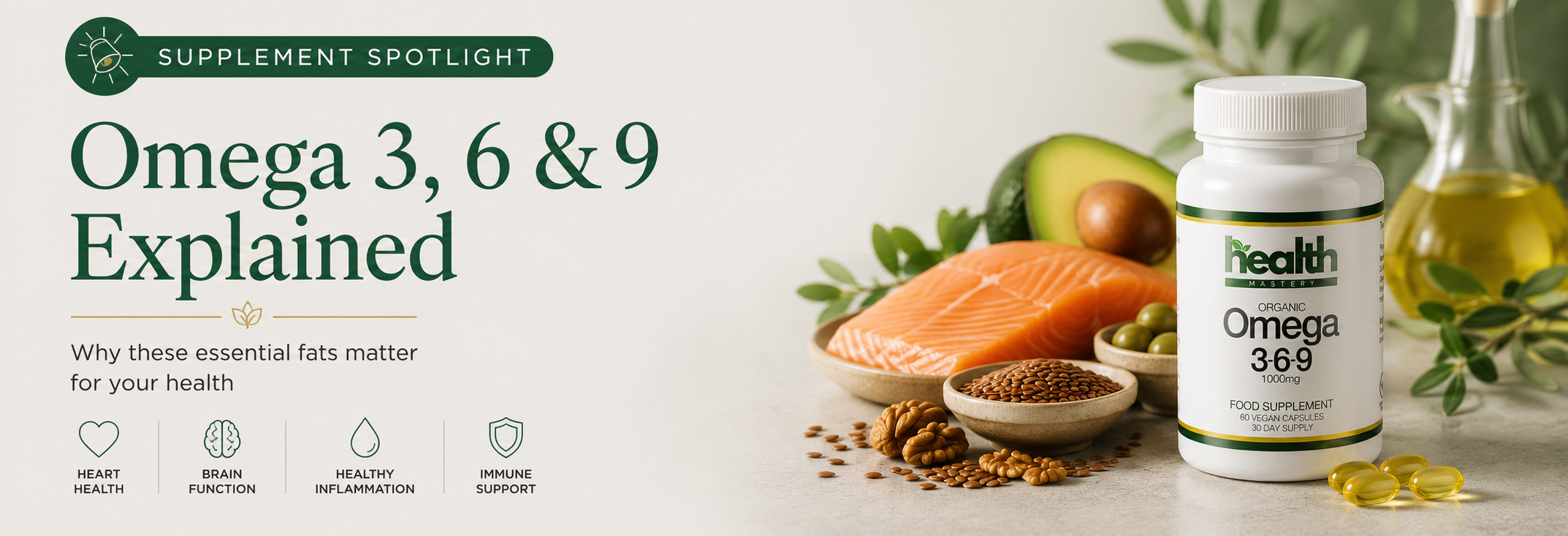
Omega 3, 6 & 9 Explained
Why these essential fats matter for your health
Fat has had a bad reputation for decades, but not all fats are created equal. In fact, certain fats are absolutely essential for life.
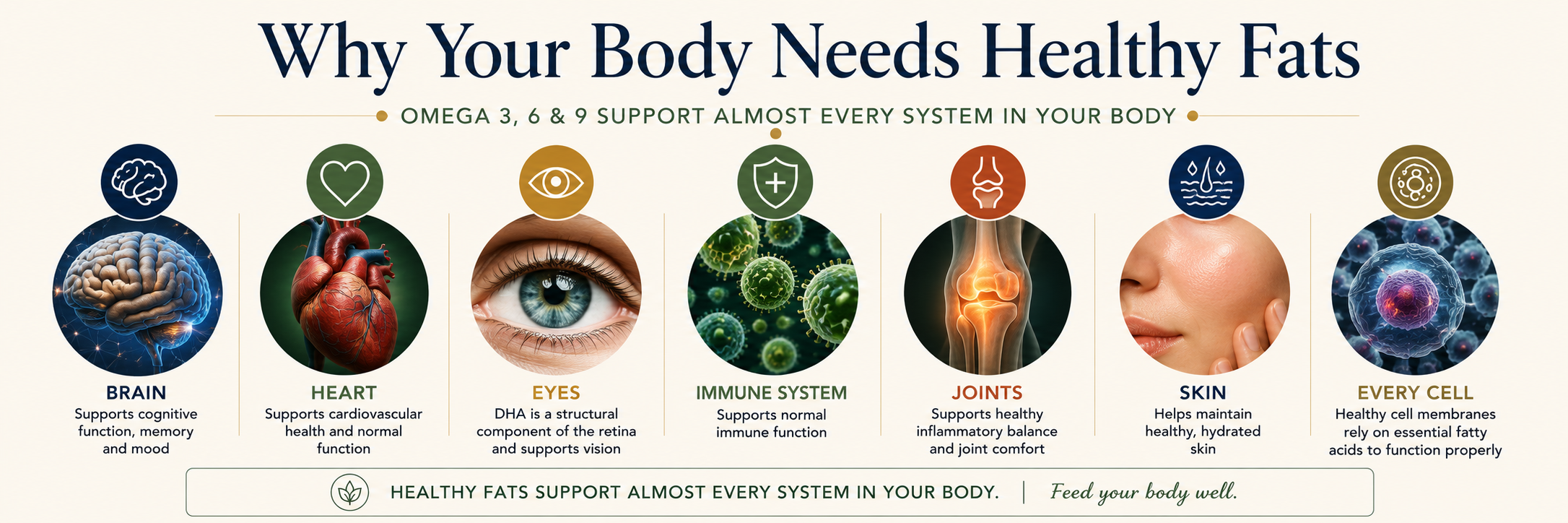
Omega-3, omega-6 and omega-9 fatty acids play important roles in almost every cell in your body. They help build healthy cell membranes, support the brain and nervous system, contribute to heart health, maintain healthy skin and eyes, and help regulate inflammation.
While many people have heard of omega-3, fewer understand the role of omega-6 and omega-9, or why having the right balance of these healthy fats matters.
In this guide, we'll explain what each one does, where they come from, and why a quality Omega 3-6-9 supplement can be a convenient way to support your overall wellbeing.
What are Omega fatty acids?
Omega fatty acids are a family of healthy unsaturated fats.
There are three main groups:
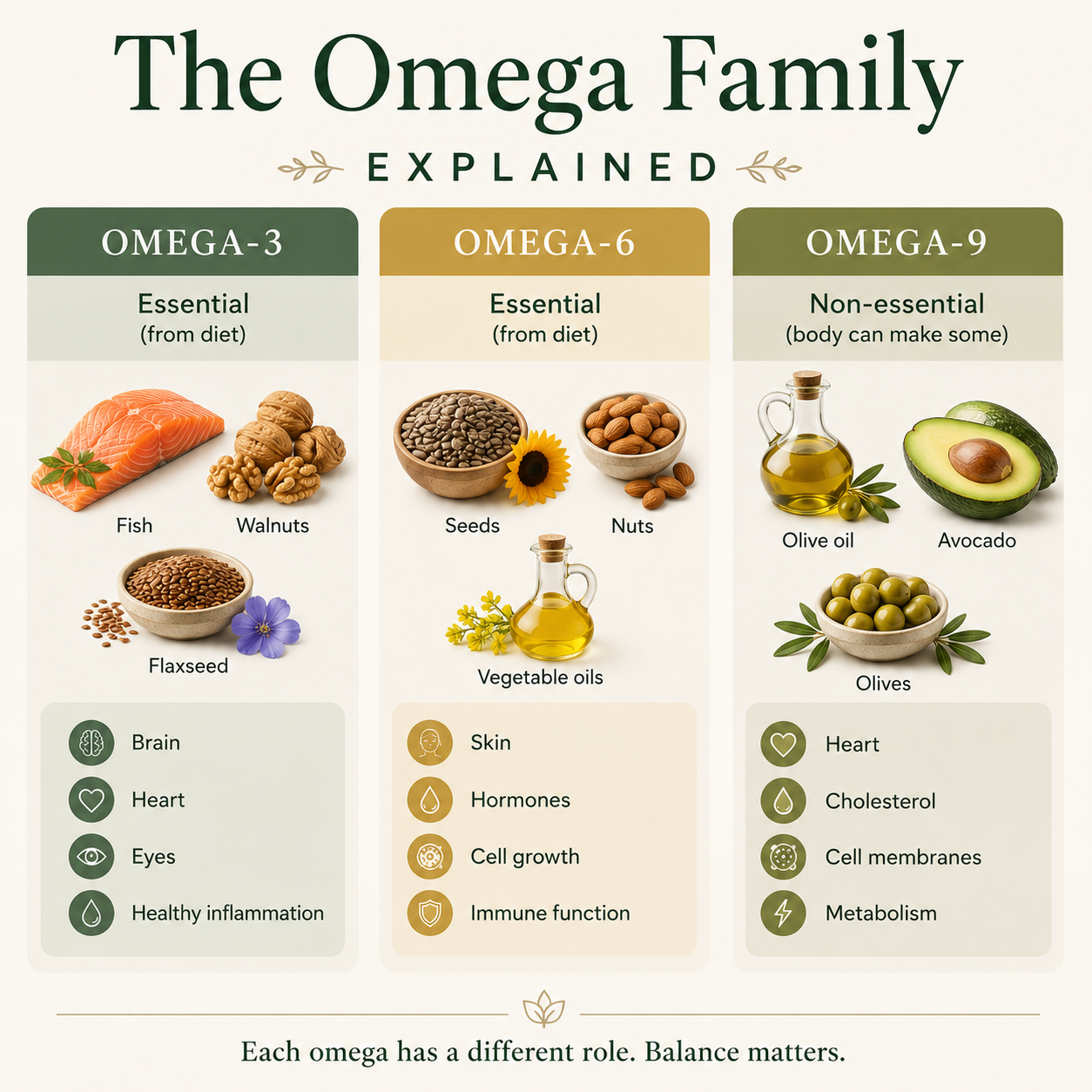
Omega-3 – essential fats that must come from the diet.
Omega-6 – also essential and obtained through food.
Omega-9 – non-essential because the body can make small amounts itself, although additional dietary sources may still be beneficial.
Together they help maintain normal body function from the brain to the heart and immune system.
Omega-3: the essential anti-inflammatory fat
Omega-3 is perhaps the best-known healthy fat, and for good reason.
It is involved in:
Normal brain function
Heart health
Eye health
Healthy inflammatory responses
Joint health
Cognitive performance
Normal development during pregnancy
The three main types are:
ALA (Alpha-linolenic acid) – found in flaxseed, chia seeds and walnuts.
EPA (Eicosapentaenoic acid) – mainly found in oily fish and marine oils.
DHA (Docosahexaenoic acid) – an important structural fat found in the brain and retina.
Many people struggle to eat enough oily fish to meet recommended intakes, making supplementation a practical option.
Omega-6: often misunderstood
Omega-6 fats are just as essential as omega-3.
They are important for:
Healthy skin
Cell growth
Brain function
Reproductive health
Immune function
Hormone production
The issue is not omega-6 itself.
Modern Western diets often contain far more omega-6 than omega-3 because processed foods frequently use vegetable oils such as sunflower, corn and soybean oil.
Maintaining a healthier balance between omega-3 and omega-6 appears to be more important than avoiding omega-6 altogether.
Omega-9: supporting everyday health
Unlike omega-3 and omega-6, omega-9 is not considered essential because our bodies can produce some on their own.
However, omega-9 fats, particularly oleic acid found in olive oil and avocados, are associated with several health benefits.
These include supporting:
Healthy cholesterol levels
Cardiovascular health
Cell membrane function
Healthy energy metabolism
They also form an important part of the Mediterranean diet, one of the world's best researched dietary patterns.
Why balance matters
Rather than focusing on just one type of fat, it's helpful to think about your overall intake.
Our ancestors are thought to have consumed omega-3 and omega-6 in relatively balanced amounts.
Today's diets often provide an abundance of omega-6 from processed foods but comparatively little omega-3 from fish, nuts and seeds.
Eating more whole foods, reducing highly processed vegetable oils where possible, and ensuring adequate omega-3 intake may help restore a healthier balance.
Should you take an Omega 3-6-9 supplement?
A balanced diet should always come first, but supplements can help fill nutritional gaps.
An Omega 3-6-9 supplement may be particularly useful if you:
Rarely eat oily fish
Want convenient daily support
Are looking to support heart and brain health
Wish to maintain healthy skin and joints
Want a simple way to increase your intake of healthy fats
Choosing a high-quality supplement made from carefully sourced ingredients is important to ensure purity, freshness and consistent potency.
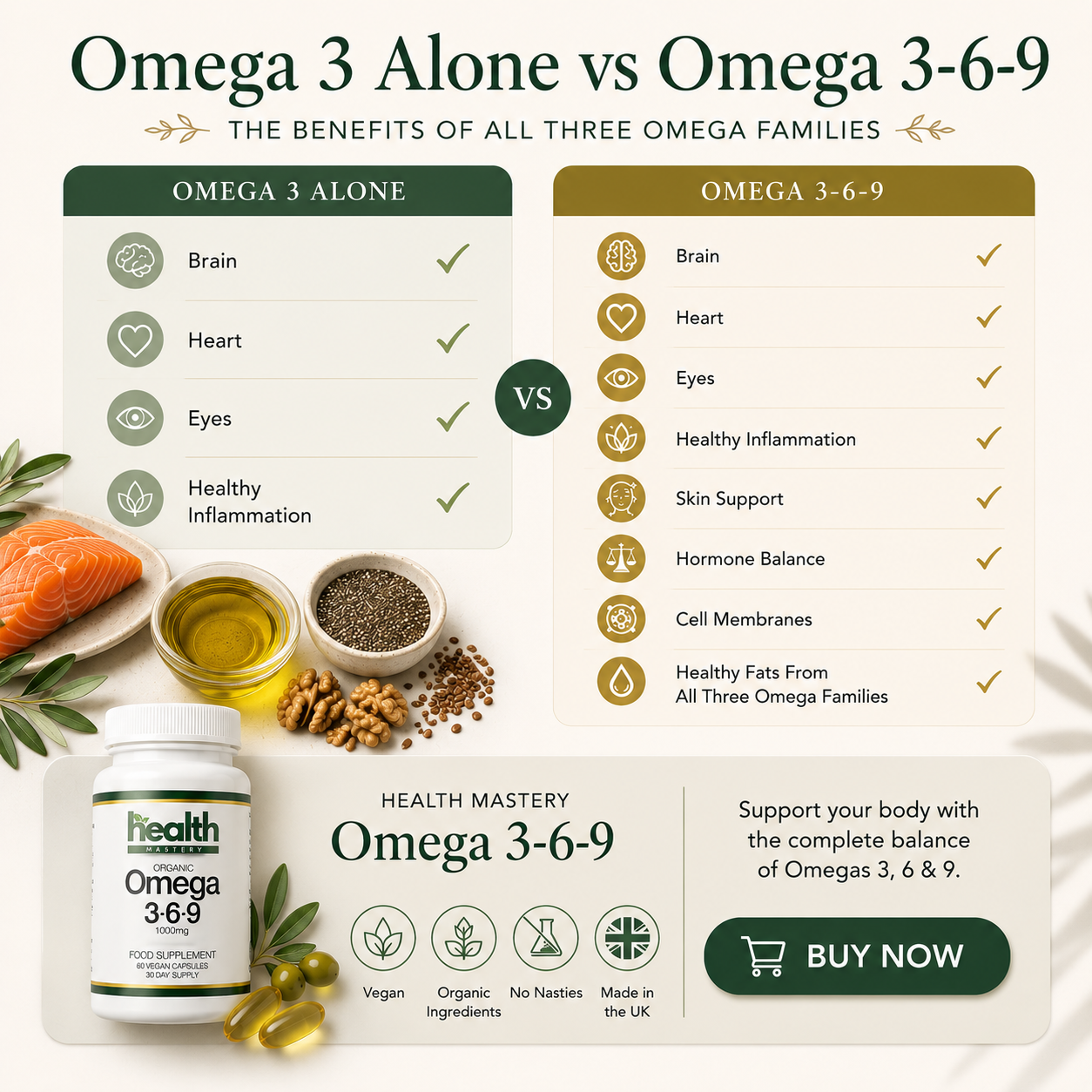
Health Mastery Omega 3-6-9
At Health Mastery, we believe supplements should complement a healthy lifestyle rather than replace one.
Our Omega 3-6-9 provides a carefully balanced blend of essential fatty acids to help support everyday wellbeing, making it an easy addition to your daily routine alongside a balanced diet rich in whole foods.
As with all our supplements, we focus on quality ingredients and straightforward formulations designed to support long-term health.
Further Reading
If you'd like to learn more, these articles may also be helpful: